Wednesday, May 26, 2010

Blissful Convergence

“The kids are going to freak out when they meet you,” my sister said to me as we passed through the gates of the elementary school around the corner from USC. “They’ve been asking about you for weeks,” she added smiling.


I looked out the window mimicking her expression, eyeing the impressive compound located in one of LA’s tougher neighborhoods, pit bulls yelping across the street, weeds usurping gardens and pavement cracks. I was excited to meet the children. I felt I already knew them from my sister’s descriptions and from their letters - they had been pen pals with my African kids for the last several months.


I had read each of the little Angelinos’ amusing letters, which were filled with insightful questions (Do you walk? Do you know about camouflaging? ) and served as portals into their young minds (I like math because when you get older you have to make sure when you buy something you have to give them the right amount or your going to have less money in your bank account). But most of all, it was touching to see how the children, mine and my sister’s, connected with each other from opposites sides of the globe. One American wrote to my ten year old Beatrice: I’m sorry about your mom. My dad passed away too and then my grandma and grandpa in the same year.


I was to give four presentations that day, one to each class that wrote my children. The first class was paired with Sylvia, my eight year old. Melanie knocked on the door just after the first bell rang and a boy struggled to push open the heavy door, first seeing my sister then me. My sister and I bear a strong resemblance; he had to have known. His tiny mouth dropped and his wide eyes glowed.


“Wooow,” he gushed, his back pressed against the door in disbelief as we walked past and the rest of the second graders turned around; soft squeals filled the room.


“Class. Ms. Crane is here with a guest,” the teacher said introducing us, but apparently we needed no introduction. They knew my sister from the talks she gave on Sylvia and me. They sat mesmerized through my sister’s presentations as well as mine, which included a slide show on life in Uganda followed by Sylvia’s answers to their most recent round of questions to her.


“Mariana. Which one of you is Mariana?” I asked the group of doe-eyed intent faces staring back at me. A little girl raised her hand. “Mariana, you asked Sylvia, ‘How do you feel on Christmas?’ Sylvia said she feels ‘burungi,’ that means good in Luganda. She also says that she likes swimming on Christmas.” Mariana’s eyes grew to saucers and her mouth spread to an exaggerated grin. (I grinned too, but remained silent about little Sylvia likely not ever swimming as her village was not immediate to a body of water.)


“Adriana. Who is Adriana?” Another girl’s arm shop up. “Okay Adriana. You asked Sylvia, ‘Do you have libraries? Do you go on field trips?’ Sylvia said, ‘No, we don’t have a library, but Maama Muzungu bought some books for us to read’.” I then explained that Sylvia didn’t know what field trips were because she has never been on one before.


I continued to go through the list of questions and answers, the children listening, interest sketched across their small faces. Then I asked for Rebeca.


“Rebeca. You asked Sylvia what her voice sounded like. She said she didn’t know, but I recorded her so you can see her and hear her voice for yourself.”


Rebeca couldn’t even smile; her face relaxed into suspended disbelief. I reached over for my laptop, pressing play for the queued video.


“Here, Rebeca. This is for you and the rest of the class.”


Friday, May 21, 2010

The God of Small Things

Since I've been back many people have asked me all kinds of questions about everyday life in Africa. How do they wash clothes? What are the schools like? What are the hospitals like? Do they have cars? How do they cook? What are their homes like?

Below is a slide show illustrating the details of everyday life in Africa. Hopefully it will answer some questions you may have about typical African living conditions as well as explain how the smaller aspects of life influence African culture and behavior. Enjoy!


Tuesday, May 11, 2010

Out of Africa

It’s hard to believe I returned from Uganda six weeks ago. At times a part of me still feels afar, strolling along red dusty roads, staring through screens of verdant matoke leaves; it is clear not all of me is here, my mind a bit unfocused and hazy, meandering and distant like a wandering stream in a hidden meadow. And yet the piece of me far away is fading, the memories and emotions of Africa losing their shape, the edges softening, the colors not so vivid; the details of my exotic rhythms losing themselves in the folds of my modernizing mind. People here will occasionally ask me about my time there and I eagerly recount beautiful moments, but I am beginning to feel slightly disassociated from those events as if I speak of another – maybe a character from book or film.


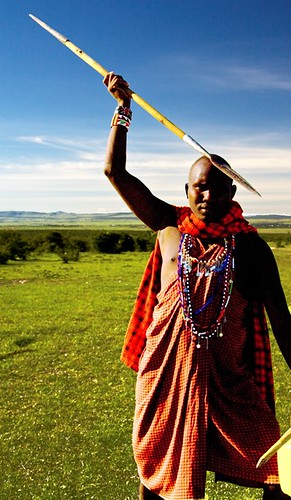
Maybe that was Karen Blixen. Maybe it wasn’t me in East Africa living among Africans, working with them side-by-side on a farm and setting off on adventures deep into the bush gapping at grazing wildlife, in step with men in colorful garb clutching iron spears and ancient traditions. Maybe that was a memoir of someone else attending to the locals’ ailments, navigating social schisms, skeptical of assumptions and convention; another silhouette against the expressive African sky.


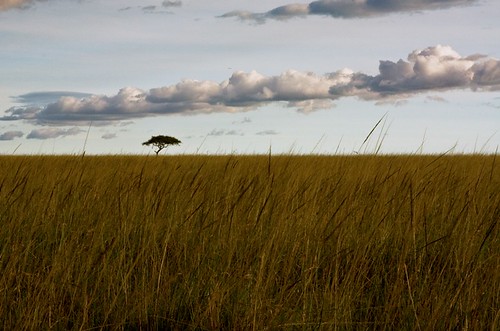
As I straddle two worlds in my fuzzy head, I watched yesterday for the first time Out of Africa, feeling at once nostalgic and comforted, understood and vaguely envious. I am not sure why I never saw the movie until now, the genre one I particularly like, the character a certain source of inspiration, and like many, I am an ardent admirer of Ms. Streep; but, strangely, I missed viewing the Best Picture award winner until after living in Africa. Watching the romantic epic unfold before me against the paradisiacal plains of East Africa, I recalled my time riding through those sweeping vistas and long grasslands dotted with acacia trees, the excitement in spotting my first lions (they weren’t hunting me, but, more preferably, mating), and I again felt my feet sinking into the soft, springtime earth of the magical land of the Masai: the Mara.


The scenery, motifs, sentiment and characters of the film were recognizable and enchanting; I was captivated by the passion between woman and man, and woman and land. But the film reminded me most of the fascinating people, indigenous and transplants, I met: the gorgeous Africans living refreshingly in the moment, welcoming me with wide smiles and arms, their curiosity of me and I of them, remembering how those ties strengthen over time while I watched the woman in the movie tirelessly work to secure land for her tribes people, reminded of African youth and their delight in my novelties while I watched the local children in the film burst into giggles as the cuckoo emerged from the clock; and I also recalled all the backpackers and overlanders and aid workers taking up residence in Africa, disillusioned by Western notions on how life should be lived and what you should do and where you should go and with whom, meeting again in my mind the menagerie of expats and dreamers following their ideals, their passions, their morals, their hearts.


And amidst all this familiarity, all these people and ideas I came to understand this past year, the movie made me realize something else I learned during my time on the restful continent, a knowledge I acquired without fully appreciating it until watching the theme explored in film: the idea of ownership; that objects and people, knickknacks and relationships, land and souls, absolutely anything and exactly everything, cannot be possessed, that, in fact, nothing can be owned beyond that which creates and comprises you as an individual in ways meaningful and unique – our spirits, attitudes and memories.


And so now I try to remember more fondly all the people and adventures, good and bad, I came to know through my African life, and, just as importantly, I am trying to see more clearly that which I seek to experience next, that which I desire to call my own.

Monday, May 3, 2010

Old Shoes

The sneakers were gently worn, not tattered and soiled like the embarrassment my running shoes inevitably become after months of jogging dusty trails, but they could not be described as new. Vaguely soiled, the blue hue muted, they had begun to lose their new shoe form, the stiffness softening appearing to mold to a certain pair of feet. My mother had probably worn them for a few weeks walking the paved hills of our neighborhood, her feet spinning round and round in them at the local Y. I recalled the sneakers very clearly, seeing them again in my mind when they became the unexpected topic of conversation an evening last week.


I was standing squeezed next to a cocktail table at the Natural History Museum in San Diego surrounded by docents and whalers, former teachers and biologist, my mother and dozens of other volunteers being thanked for their service with chicken fajitas and red table wine.


“And this is the daughter who just got back from Africa,” my mother said introducing me to her co-volunteers, a way of distinguishing me from my sisters – my social awkwardness seemingly not distinctive enough. The women were receptive and apparently interested in my journey and began asking about Uganda. What did the people eat? How did they cook? Where did they get their water? What do their homes look like? I explained the life that I had come to know, the daily rhythms that had become comfortable and routine. It would take hours to cook a meal of beans and posho or maize and potatoes, you fetch your own water (although I had plumbing), most villagers live in mud homes, the people in town usually dwell in blocks of simple brick construction.


“And is it strange to be back?” They asked.


Yes, it is. And then my mind began to drift.


As we stood around the cocktail table, my mom telling them about her trip to visit me, I thought of all the things they didn’t have - they, my Ugandan family and friends - their homes sparse and uncluttered, their lives devoid of material worth, that world far away and fading in my mind; and I considered all the things we have – we, my family and friends here in America - all the things bombarding us to be bought, all the things cluttering our homes and minds, that world sharpening back into focus before my eyes; and I remembered how happy I was and how happy they were not owning very much, unencumbered with possessions, living without incessant indulgence, without insatiable consumption, without the sickness of constant coveting that seeps insidiously, often unperceivably, into every pore.


And then my mom began telling the women about giving my Ugandan sister, Ester, a Clinique make-up bag, a free gift my mother received having bought magenta lipstick or grey eyeliner or the like, and how Ester’s whole face lit up when she received it and how she proudly carried the bright pink plastic container with her everywhere thereafter as a privileged American would a Prada handbag, and as my mom told the volunteers this I recalled the night she gave the bag to Ester, my mom saying to me, rather surprised, that if she knew Ester would like the bag so much she would have brought more, and I envisioned I am sure the same thing as my mother just then: a whole cabinet stuffed with similar toiletry bags collected over the years from department store make-up counters, all sitting under the sink perfectly unused.


And that’s when my mom told the women about the sneakers, those faded cobalt-stripped Nike sneakers, one of several pairs resting on the shelves in our laundry room. I knew my mom gave the sneakers to Beatrice, but I was not with them at the time, not knowing exactly what happened until the evening at the museum; or, maybe I did know and had forgotten; I had forgotten because it was unmemorable, an expected exchange, a normal response at the time, at a time when I was accustomed to living without and seeing others live the same.


Sipping wine from plastic cups, an intact dinosaur skeleton erect on the far side of the long, airy room, a gift shop just next to us with jewelry and pictures and sculptures (one abstract piece of soft black stone strangely similar to my African carving of a family standing in a circle holding hands, their arms turning indefinitely in unison), we stood around the cocktail table enjoying the day’s final light golden and dramatic falling through enormous windows; my mom said to the women:


“I gave one of the girls, Beatrice, my old sneakers. I gave them to her the night I was leaving because I didn’t really need them and I knew she would like them. I brought her into the bedroom so the other kids wouldn’t see and said, ‘Here, Beatrice. I want you to have these.’ She took the sneakers and then dropped to her knees. She grabbed my hand and began kissing it, saying over and over again, ‘thank you, thank you, thank you,' while tears streamed down her face.”

Old Shoes

Monday, April 26, 2010

Thank You and Looking Back

Another thank you from the kids to their friends helping them in America.


Below is the first video of the children showing the conditions we found them in and how their lives changed rapidly under our care. You can also go back and follow the story of their progress by clicking the "My Kids" label to the right, or clicking here.


Thursday, April 22, 2010

The Metamorphosis

No, I am not dead. Although, I am quite sure I am not the same. I am dead in a way. Maybe I am slumbering in a cocoon a part of me having passed in a sense and I am preparing to be reborn. That sounds right. I am in pupa metamorphosing and will emerge imminently as something new, possibly entirely unrecognizable. I am hoping a butterfly. But it could be a monstrous vermin.

I have in fact arrived back in the States. Strange at first it seemed the acclimation process escaping me, maybe it a wives tale passed down through wild back-packer legend and imagination. How is it adjusting? People would ask seeing me for the first time to which I would inevitably respond it wasn’t a problem and boy was it nice to be clean and have consistent electricity and hot running water and, oh yes, it's also wonderful to be with old friends and family, fury and not. And maybe because I soon thereafter contracted what appears to be shingles and because soon thereafter my family and I flew from Cali to the Chi and rural Indiana for a reunion, maybe because of these reasons - sickness and constant change - I have been feeling a little not like myself, suffering from all sorts of time and space and cultural adjustments, from deficient civilization to Californication to White Sox Nation to Survivalist abomination, now I am just craving hibernation.

I don’t want to see a movie, I don’t want to visit the mall, I don’t want to drive my car, I don’t want to go too far. My world was so small for so long. Me waking in the morning to a quick wash from a basin of cold water, throwing on a shirt, one of a handful of choices, putting on some pants, one of maybe three choices, and walking a short distance to town and helping at the snack shop and looking after the kids and walking through town some more as all the townspeople spied me knowing where the muzungu was at every moment and all the while I had little to no idea what was happening on the outside, Michael Jackson’s death filtering down to me and every village in the world, and I heard about a health care package and Lady Gaga, but besides this and incessant reporting on the English Premier League (a Ugandan fixation) I didn’t have the first clue. And having been a news junkie up until about a year ago, and now again blessed (or is it cursed?) with constant awareness from an impolite 24-hour news cycle on television, internet, radio, and podcasts, I find myself not really wanting to pay attention, the world still something other, something outside my cocoon, spinning far too fast like an out of control toy top, making me dizzy and anxious and so I prefer to look away.

And I look away and ahead wondering when I will be ready to face things as I once did: jobs and news channels, malls and movies. And when, especially, will I be able to deal with choice? So many butters in the market and pastas and breads, and ice creams and juices, and dressings and jams, and chocolates and cheese, and Asian sauces and Mexican chilies, and gourmet mushrooms and packaged spinach, I almost can’t believe it, my grocery store exactly the same as it was a year ago, me very well remembering its contents and their locations, but it all a bit overwhelming after frequenting Ugandan shops with usually one choice of offerings, necessities like cooking oil, rice and beans.

And so I sit in my cocoon wondering, but not really worrying (as I am quite Africanized and Africans it can be said generally don’t waste their time worrying), wondering when the world won’t feel like it's spinning so madly and I will be ready for reentry, emerging maybe as a fluttering butterfly, or possibly a scuttering beetle; I am still not quite sure, but I have had much practice and learned quite well this past year how to wait patiently.

Saturday, April 3, 2010

Five Angels Inspiration

As they inspired its inception and are its beneficiaries, the Snack Shop I established in Lugazi, in all its deep-fried divinity, in all its caloric splendor, has been rechristened the “Five Angels Snack Shop” in honor of my five African children – I also had to rename it as a way to secure ownership and disentangle myself from some people who didn’t have the best of intentions. Deciding upon the name was as simple as the process to officially rename it; African life can be blissfully easy at times: no legal hoops to jump, no rebranding prices to pay, no registration or red-tape to maneuver; I just had to change the names on signs.


And so some days back an artist hung from a ladder in our tiny shop as the cooks rolled dough, fried pastries, sautéed vegetables, as the townspeople, our customers, our regulars, lined up on our steps outside the counter and display case eyeing the samosas, donuts, pancakes and chapatti. I smiled amidst the chaos, sandwiched between the ladder and my busy cooks and our line of customers. At least things now are working; at least I will leave with a sense of accomplishment, a sense of service; peace of mind.


I have enjoyed these last few weeks paying my dues, putting in my time at the shop; watching the new business slowly settle into place, problems ironing themselves out with no small amount of work on my part and Ester’s and her half-brother’s, Ivan; us trying out different business models: making chapatti from another location to cut energy costs, purchasing ingredients in bulk from market in Kampala, increasing the prices of some products. And with all the trials and errors and weeks and months of uncertainty, the sacrifices and toil have paid off: for the month of March we will have finally made a significant profit – one which indicates that the few thousand dollars I invested in start-up costs for the shop (with my kind donors’ money) for items including a gas cooker, deep fryer, refrigerator, furniture, etc., will pay for itself in a little more than a year’s time. (And this is where I sigh deeply with relief, deflating like a worn beach ball.)


Now that I feel more secure I can look back and say that I’ve enjoyed the process of getting the business off the ground, watching its progress, sure and shaky at times; I can say I’ve taken pleasure in the rough moments as well as the little shiny ones: me working alongside Ester and the cooks, rolling dough for chapatti, my garments sprinkled with flour, greeting customers, Hi muzunugu! the townspeople say as they watch me amused by my attempts at preparing African food and me watching their eyes light up as they grasp their favorite snacks wrapped in paper wet with hot oil.


This welcoming, the town’s warm reception to the shop has been a pleasant surprise, a sincere source of pride and happiness for me: not only are the children being helped through the business, but otherwise out-of-work women are employed and the town is appreciatively benefiting from delicious products and quality services. In fact, one of our biggest problems in the opening months was meeting demand, especially with our beloved chapattis: unique and sticky, thick and buttery.


And so the little shop hums in the town centre, churning out oily creations and sugary delights; its location and goods well known by the townspeople. I mentioned the shop’s stature to Ester the other day, people know where it is? Everyone knows where it is?


She nodded, smiling broadly, proud to work there, proud to supervise, proud to reap its benefits, “Yes, everyone knows where it is. Everyone knows the snack shop.”


Amenah, one of our cooks, and her daughter Samiya


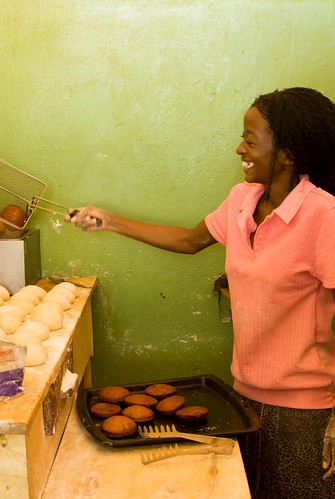
Florence, another cook, frying pancakes


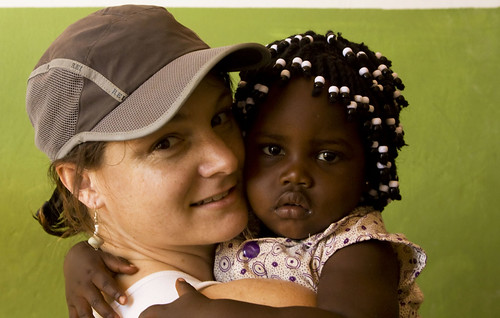
Me and Samiya - another picture of the baby just because she is so damn cute


Richard rolling the dough for pancakes


Ester and the kids hanging at the Shop