Friday, December 17, 2010
A Work Of Art
Today I attended a memorial service for my former mentor, an extraordinary man swiftly and heartbreakingly taken by pancreatic cancer. At the service I saw many former colleges among the hundreds paying their respects to a great, but humble man who undoubtedly impacted thier lives as positively as he did mine.
Thus is the time for reflection.
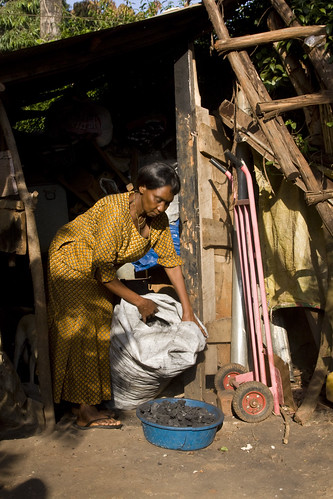
I speak with Ester and my African children as often as I can still, still looking out for their well-being despite the obstacles between us: their lingering in undeveloped, inefficient Africa and me moving at the speed of light some 13,000 miles away. Might as well be another planet, I tell people. Ester is still managing the snack shop, although it's not doing as well as I would like, but more importantly, the kids are happy and grateful. I can hear them shrieking and laughing in the background whenever I call, and see in my mind their bouncing off the bunk beds, running barefoot on the concrete floor, Rachel and Peanut ganging up on Richard in play fight while Sylvia smiles watching, B2 reads and Agnes cooks on the charcoal stove.
I have been told by Ester and the the hospital that was treating Richard that his health has improved, but he is still not quite well. The hospital has said they could do no more for him, so I ensured that he was taken to another reputable orthopedic surgeon in Kampala. After checking him, the new doctor says that Richard just needs some medication to dry up the leg and special bandaging, a treatment course that should just take a few weeks. So we will find out shortly if he will finally be healed, but I reamain cautiously optimistic, this is Africa, I tell myself and others.
So they - the kids and Ester - are there, and I am here, and God only knows when our lives will collide in person again, and God only knows if things will work out with the project as I envisioned, and God only knows if I will ever become accustomed to straddling the vast divide between our two staggeringly different worlds. But like most significant things in life, there is no clear end; new situations and new people and new emotions surface and fall with the passage of time; we collect; we throw away; we rearrange; we hold onto what is most dear and continue like an artist molding our own works of art.
Tuesday, June 29, 2010
Reality Checks
I am slipping back more and more into the life I once knew, knowing I will never quite be the same again, but I have once more grown accustomed to traffic and paved roads; the selection of a hundred cereals and dozens of cooking oils at the store; news, music, advertisements, cell phones, laptops, televisions and pdas a constant affront to my senses. I am getting a little impatient again, and a touch ungrateful. Expectations are swelling, so is my sense of me: I want to do this; I don't want to do that. The aura of duty and service dwindling. When will I get a job? When will I get money?
I spoke with Emma this morning. She is my Ugandan cousin, my Aunt Vinnie's daughter whom I stayed with often in Kampala, sometimes running around together in the capital going to muzungu bars and waking up the next morning with headache thinking, man I'm old.
There was a boy that stayed with their family, one of their cousins. He often parked himself on the couch next to the T.V. in the large sitting room, watching Ugandan music videos, dubbed telenovella or maybe a pirated DVD rented from the shop around the corner. The boy rarely spoke, sitting with his jaw always ajar, his eyes dully watching the world around him. He didn't like going to school, preferring television and video games. Emma told me he stayed with them because he was good friends with Derrico, their youngest sibling, and because he would attend classes for his kind Aunt Vinnie.
And then one morning I awoke at their house some months ago to find all the younger kids gone to school, but Joseph still sitting in front of the TV.
"You should go to school, Joseph. Just cause Aunt Vinnie isn't here today doesn't mean you shouldn't be in class," I yelled to him from the kitchen. He didn't even look at me, still watching the T.V. with his mouth agape. What a weird boy.
Emma sort of laughed behind me going in and out the kitchen to make food on the charcoal stove outside.
"He doesn't like to go because he' sick," she said softly so he couldn't hear. "He says there's no point because he is going to die."
"What?" I asked, although I needed to further explanation.
"He's got HIV."
She told me the boy was very sick and actually older than Derrico, although he looked two or three years his junior. After that I watched him more, noticing the sick child smiled around his cousin, I think the only time I saw him smile, laughing while thoughtful and ebullient Derrico played video games. I saw Joseph and Derrico together all the time the first several months I visited Vinnie's, but then around the holidays or maybe it was after the beginning of the year, Joseph was noticeably absent from their sitting room, the seat next to the T.V. empty.
"He's sick," Emma responded when I asked about the boy. "He went back to stay with his father. Mommy couldn't take care of him all the time."
And I never saw him again.
And then this morning, thousands of miles and moments away, I got an email from Emma. She'd been busy with exams, she hadn't heard from my kids. Oh, and our cousin Joseph had passed away about three weeks ago.
I called her immediately.
"He kept getting better then falling sick again," she said.
"Was he taking his medicine?"
"Yes. Mommy was taking care of him. But one day he just closed his eyes," she explained plainly as a red-tailed hawk flew overhead casting me in its shadow, while I sat by my parent's pool that rests on a hill overlooking swaying eucalyptus trees in a chaparral canyon, cars on well-paved roads below us going to work, dropping children off at schools, the things I was growing accustomed to slamming into the things I could easily forget.
"Derrico cried," she added of her little brother. Ugandan men and boys never cry, she didn't have to tell me. I hung up the phone feeling shameful.
I don't have any pictures of Joseph, but I wish I did. Here are some pictures of Aunt Vinnie and Derrico in their backyard the morning of a solar eclipse.
Friday, June 4, 2010
Blissful Convergence: The Fourth-Graders
Dear Beatrice,
Happy Valentine’s Day! It has been a long time since writing a letter. Valentine’s Day is something we celebrate of love and kisses. I wanted to write/say how are you doing? Oh, and what are 20,000 shilips [shillings]. By the way how is Uganda? Beatrice you are a fun person to write to. I hope you study. Again, Happy Valentine’s Day.
Your Friend,
Emily Peralta
Dear Beatrice,
My name is Joseph. I would like to ask you questions about you. What is your favorite food? What is your favorite sport? What do you do with your family? How many brothers and sisters do you have? I have two brothers. One has twelve the other one has three. The little one bothers me too much. The big one always plays. I am a terrific student.
Sincerely,
Joseph Castro
Dear Beatrice,
How are you? I am fine. Today was rainy here. Was it good in Uganda? I think we will be good friends. Is your country grassy or sandy? I want to know about you and your country. I am an only child. Are you too? I like to go outside. Do you? What are some of your traditions? What is the name of the language you speak? What remedies are there in Uganda? Are the flowers pretty? Do you think we will be friends? What do you like?
I hope you write back.
Sincerely,
Anthony
Dear Beatrice,
Hi how are you Beatrice? I’m fine. I am so happy writing to you. I was wondering of a song you told me about. I think it is bread in butter. I have two questions for you. What is your favorite food? Also, if you like animals. I love animals. I was wondering if you could send me a picture of the animals in Africa. I hope you write back.
Your Friend,
Jasmine
I began the presentation by giving each of the children Beatrice’s replies. They stared wide-eyed at the papers, leaning over each other comparing answers. Then I played the video on everyday Ugandan life, and like in the second grade class, the children discussed their impressions afterwards, little voices telling me they noticed Ugandan children had to fetch water, didn’t have desks in school, played with trash because they had no toys and ate food they grew in the gardens. I made it a point to explain during the slide show when a picture appeared of children leaning to the ground cleaning a school hall with rags that there were no janitors at Ugandan schools. I heard a room full of gasps...especially from the teachers. How would you like to go out and clean the halls now? The teachers gruffed to their children.
I then passed around jewelry from Uganda, explaining that some of the beads were made of paper, which women painstakingly rolled, dyed and varnished. I showed them the wallet made of bark and the earrings made of reed. We talked about the clothes Ugandans wore. I explained they either draped themselves in traditional African cloth with vivid patterns, or more commonly, put on Western shirts and pants. I glanced around at nicely dressed children behind wide white desks.
“What do you do with your clothes when you don’t want them anymore?” I asked.
“We give them to charity.”
“Right. And do you know what happens to many of the clothes you donate to charity?” The kids looked at me expressionlessly. “They get sent to Africa.” I paused letting it sink in. “And guess what? Africans have to buy them – usually at open markets where the clothes are piled on the ground. They don’t pay much, maybe 25 or 50 cents for a shirt, but for them sometimes that’s a lot of money. You might even see a T-shirt from this elementary school in Africa.” I pointed to a girl in a bright pink and sunshine flowered shirt. “Someday you may get tired of that nice shirt or too big for it, and you’ll give it to charity and a girl in Africa might end up wearing it.” The kids all looked down at their clothes.
I couldn’t speak for long; my presentation was limited to about fifteen minutes, but I knew how it would end.
“Jasmine. Which one of you is Jasmine?” A round faced girl in the corner giggled and raised her hand. “Beatrice told you in her first letter she wanted to sing you a song called Bread and Butter. Do you remember?” Her brown mane flopped up and down. I turned to the rest of the class to explain. “The song is about friendship, how friends go together like bread and butter. Beatrice liked having Jasmine and all of you as friends and wanted to show it.” I turned back to Jasmine. “Before I left Uganda, I recorded Beatrice singing the song so you and the rest of the class could hear it.”
A hushed anticipation swept across the little crowd. Then Beatrice’s sweet voice filled the room.
Wednesday, May 26, 2010
Blissful Convergence
“The kids are going to freak out when they meet you,” my sister said to me as we passed through the gates of the elementary school around the corner from USC. “They’ve been asking about you for weeks,” she added smiling.
I looked out the window mimicking her expression, eyeing the impressive compound located in one of LA’s tougher neighborhoods, pit bulls yelping across the street, weeds usurping gardens and pavement cracks. I was excited to meet the children. I felt I already knew them from my sister’s descriptions and from their letters - they had been pen pals with my African kids for the last several months.
I had read each of the little Angelinos’ amusing letters, which were filled with insightful questions (Do you walk? Do you know about camouflaging? ) and served as portals into their young minds (I like math because when you get older you have to make sure when you buy something you have to give them the right amount or your going to have less money in your bank account). But most of all, it was touching to see how the children, mine and my sister’s, connected with each other from opposites sides of the globe. One American wrote to my ten year old Beatrice: I’m sorry about your mom. My dad passed away too and then my grandma and grandpa in the same year.
I was to give four presentations that day, one to each class that wrote my children. The first class was paired with Sylvia, my eight year old. Melanie knocked on the door just after the first bell rang and a boy struggled to push open the heavy door, first seeing my sister then me. My sister and I bear a strong resemblance; he had to have known. His tiny mouth dropped and his wide eyes glowed.
“Wooow,” he gushed, his back pressed against the door in disbelief as we walked past and the rest of the second graders turned around; soft squeals filled the room.
“Class. Ms. Crane is here with a guest,” the teacher said introducing us, but apparently we needed no introduction. They knew my sister from the talks she gave on Sylvia and me. They sat mesmerized through my sister’s presentations as well as mine, which included a slide show on life in Uganda followed by Sylvia’s answers to their most recent round of questions to her.
“Mariana. Which one of you is Mariana?” I asked the group of doe-eyed intent faces staring back at me. A little girl raised her hand. “Mariana, you asked Sylvia, ‘How do you feel on Christmas?’ Sylvia said she feels ‘burungi,’ that means good in Luganda. She also says that she likes swimming on Christmas.” Mariana’s eyes grew to saucers and her mouth spread to an exaggerated grin. (I grinned too, but remained silent about little Sylvia likely not ever swimming as her village was not immediate to a body of water.)
“Adriana. Who is Adriana?” Another girl’s arm shop up. “Okay Adriana. You asked Sylvia, ‘Do you have libraries? Do you go on field trips?’ Sylvia said, ‘No, we don’t have a library, but Maama Muzungu bought some books for us to read’.” I then explained that Sylvia didn’t know what field trips were because she has never been on one before.
I continued to go through the list of questions and answers, the children listening, interest sketched across their small faces. Then I asked for Rebeca.
“Rebeca. You asked Sylvia what her voice sounded like. She said she didn’t know, but I recorded her so you can see her and hear her voice for yourself.”
Rebeca couldn’t even smile; her face relaxed into suspended disbelief. I reached over for my laptop, pressing play for the queued video.
“Here, Rebeca. This is for you and the rest of the class.”
Friday, May 21, 2010
The God of Small Things
Below is a slide show illustrating the details of everyday life in Africa. Hopefully it will answer some questions you may have about typical African living conditions as well as explain how the smaller aspects of life influence African culture and behavior. Enjoy!
Tuesday, May 11, 2010
Out of Africa
It’s hard to believe I returned from Uganda six weeks ago. At times a part of me still feels afar, strolling along red dusty roads, staring through screens of verdant matoke leaves; it is clear not all of me is here, my mind a bit unfocused and hazy, meandering and distant like a wandering stream in a hidden meadow. And yet the piece of me far away is fading, the memories and emotions of Africa losing their shape, the edges softening, the colors not so vivid; the details of my exotic rhythms losing themselves in the folds of my modernizing mind. People here will occasionally ask me about my time there and I eagerly recount beautiful moments, but I am beginning to feel slightly disassociated from those events as if I speak of another – maybe a character from book or film.
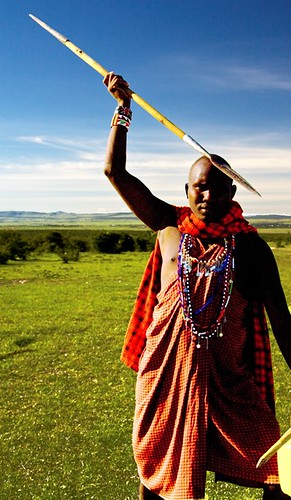
Maybe that was Karen Blixen. Maybe it wasn’t me in East Africa living among Africans, working with them side-by-side on a farm and setting off on adventures deep into the bush gapping at grazing wildlife, in step with men in colorful garb clutching iron spears and ancient traditions. Maybe that was a memoir of someone else attending to the locals’ ailments, navigating social schisms, skeptical of assumptions and convention; another silhouette against the expressive African sky.
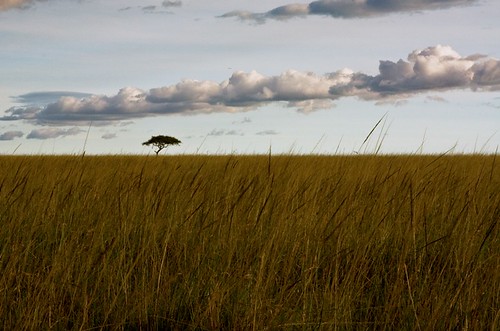
As I straddle two worlds in my fuzzy head, I watched yesterday for the first time Out of Africa, feeling at once nostalgic and comforted, understood and vaguely envious. I am not sure why I never saw the movie until now, the genre one I particularly like, the character a certain source of inspiration, and like many, I am an ardent admirer of Ms. Streep; but, strangely, I missed viewing the Best Picture award winner until after living in Africa. Watching the romantic epic unfold before me against the paradisiacal plains of East Africa, I recalled my time riding through those sweeping vistas and long grasslands dotted with acacia trees, the excitement in spotting my first lions (they weren’t hunting me, but, more preferably, mating), and I again felt my feet sinking into the soft, springtime earth of the magical land of the Masai: the Mara.
The scenery, motifs, sentiment and characters of the film were recognizable and enchanting; I was captivated by the passion between woman and man, and woman and land. But the film reminded me most of the fascinating people, indigenous and transplants, I met: the gorgeous Africans living refreshingly in the moment, welcoming me with wide smiles and arms, their curiosity of me and I of them, remembering how those ties strengthen over time while I watched the woman in the movie tirelessly work to secure land for her tribes people, reminded of African youth and their delight in my novelties while I watched the local children in the film burst into giggles as the cuckoo emerged from the clock; and I also recalled all the backpackers and overlanders and aid workers taking up residence in Africa, disillusioned by Western notions on how life should be lived and what you should do and where you should go and with whom, meeting again in my mind the menagerie of expats and dreamers following their ideals, their passions, their morals, their hearts.
And amidst all this familiarity, all these people and ideas I came to understand this past year, the movie made me realize something else I learned during my time on the restful continent, a knowledge I acquired without fully appreciating it until watching the theme explored in film: the idea of ownership; that objects and people, knickknacks and relationships, land and souls, absolutely anything and exactly everything, cannot be possessed, that, in fact, nothing can be owned beyond that which creates and comprises you as an individual in ways meaningful and unique – our spirits, attitudes and memories.
And so now I try to remember more fondly all the people and adventures, good and bad, I came to know through my African life, and, just as importantly, I am trying to see more clearly that which I seek to experience next, that which I desire to call my own.
Monday, May 3, 2010
Old Shoes
The sneakers were gently worn, not tattered and soiled like the embarrassment my running shoes inevitably become after months of jogging dusty trails, but they could not be described as new. Vaguely soiled, the blue hue muted, they had begun to lose their new shoe form, the stiffness softening appearing to mold to a certain pair of feet. My mother had probably worn them for a few weeks walking the paved hills of our neighborhood, her feet spinning round and round in them at the local Y. I recalled the sneakers very clearly, seeing them again in my mind when they became the unexpected topic of conversation an evening last week.
I was standing squeezed next to a cocktail table at the Natural History Museum in San Diego surrounded by docents and whalers, former teachers and biologist, my mother and dozens of other volunteers being thanked for their service with chicken fajitas and red table wine.
“And this is the daughter who just got back from Africa,” my mother said introducing me to her co-volunteers, a way of distinguishing me from my sisters – my social awkwardness seemingly not distinctive enough. The women were receptive and apparently interested in my journey and began asking about Uganda. What did the people eat? How did they cook? Where did they get their water? What do their homes look like? I explained the life that I had come to know, the daily rhythms that had become comfortable and routine. It would take hours to cook a meal of beans and posho or maize and potatoes, you fetch your own water (although I had plumbing), most villagers live in mud homes, the people in town usually dwell in blocks of simple brick construction.
“And is it strange to be back?” They asked.
Yes, it is. And then my mind began to drift.
As we stood around the cocktail table, my mom telling them about her trip to visit me, I thought of all the things they didn’t have - they, my Ugandan family and friends - their homes sparse and uncluttered, their lives devoid of material worth, that world far away and fading in my mind; and I considered all the things we have – we, my family and friends here in America - all the things bombarding us to be bought, all the things cluttering our homes and minds, that world sharpening back into focus before my eyes; and I remembered how happy I was and how happy they were not owning very much, unencumbered with possessions, living without incessant indulgence, without insatiable consumption, without the sickness of constant coveting that seeps insidiously, often unperceivably, into every pore.
And then my mom began telling the women about giving my Ugandan sister, Ester, a Clinique make-up bag, a free gift my mother received having bought magenta lipstick or grey eyeliner or the like, and how Ester’s whole face lit up when she received it and how she proudly carried the bright pink plastic container with her everywhere thereafter as a privileged American would a Prada handbag, and as my mom told the volunteers this I recalled the night she gave the bag to Ester, my mom saying to me, rather surprised, that if she knew Ester would like the bag so much she would have brought more, and I envisioned I am sure the same thing as my mother just then: a whole cabinet stuffed with similar toiletry bags collected over the years from department store make-up counters, all sitting under the sink perfectly unused.
And that’s when my mom told the women about the sneakers, those faded cobalt-stripped Nike sneakers, one of several pairs resting on the shelves in our laundry room. I knew my mom gave the sneakers to Beatrice, but I was not with them at the time, not knowing exactly what happened until the evening at the museum; or, maybe I did know and had forgotten; I had forgotten because it was unmemorable, an expected exchange, a normal response at the time, at a time when I was accustomed to living without and seeing others live the same.
Sipping wine from plastic cups, an intact dinosaur skeleton erect on the far side of the long, airy room, a gift shop just next to us with jewelry and pictures and sculptures (one abstract piece of soft black stone strangely similar to my African carving of a family standing in a circle holding hands, their arms turning indefinitely in unison), we stood around the cocktail table enjoying the day’s final light golden and dramatic falling through enormous windows; my mom said to the women:
“I gave one of the girls, Beatrice, my old sneakers. I gave them to her the night I was leaving because I didn’t really need them and I knew she would like them. I brought her into the bedroom so the other kids wouldn’t see and said, ‘Here, Beatrice. I want you to have these.’ She took the sneakers and then dropped to her knees. She grabbed my hand and began kissing it, saying over and over again, ‘thank you, thank you, thank you,' while tears streamed down her face.”
Old Shoes