Tuesday, March 2, 2010

Time After Time

They say you can’t travel thorough time, but I can and do all of the time, actually oftentimes moving forwards and backwards at once, my head spinning with thoughts on what has happened and what is about to occur. I engaged in this type of time warp in my old space, during my time in the fast-paced West where unlike here most people think of all times except the present, spending most of their time lagging in the past and accelerating into the future. And as I am just about to reenter that old space that mixes the former and the following, as I verge on breaking the time-space continuum, I find that I am no longer thinking of only the present here and now, which I have been doing for some time, for these many months; I am preparing as it were to leave this space and return to the future, and I find myself more and more of the time thinking of exactly that, moving back and forth.

Nearly a year has passed since I came to Uganda and nearly 10 months since I first met my beloved five children. It is impossible to really ascertain much less describe how much I have changed during that time, as well as how much the children have developed. I think back to the places we occupied before, me in a comfortable Western life complete with luxury cars and fancy flat screens and high speed internet and paved roads and quality medicine and quality food and quality everything and they in impoverished Third World existences of mud houses and unclean water and field labor and uneducated minds and poor nutrition and poor medical treatment and poor everything , and how our lives crashed into wild convergence this last year and how our lives will swiftly diverge breaking apart again in just a few short weeks, in a time too soon happening.

Thinking back to the children they were when we found them, sometimes I want to laugh. Rachel the first few months we had her took to opening and shutting doors in the Balaza’s home over and again, me realizing later that she engaged in this rather annoying habit because the kids’ home and those they visited in the village didn’t have doors, opening and closing a door was in fact for her an endlessly fascinating form of entertainment. And fast-forwarding to now, likewise the three youngest girls to this day insist on bathing at their jaaja’s (grandparents) because the house has a shower head, which still doesn’t yield hot water, but a shower head nonetheless, which the children stand under squealing and splashing, revealing in the novelty of (sort-of) modern plumbing.

Thinking back to the children they were, sometimes I want to cry. Despite knowing that their lives have altered drastically, the images of those five desperate faces in the village that me, Ester, Aunt Vinnie and Sumete first found last June still haunt my mind, the past lingering into the present pressing ominously against the future. I see those faces again in my memory, in recalling what was, and am reminded of them, and what still is, at times when I turn on the TV, floating before my eyes again in the aftermath of earthquakes and famines, floods and wars, tiny faces that are at once tense and apathetic, shocked and hopeless, ruined from the past, tortured in the present, uncertain of the future; I knew those faces before, didn’t understand them until now, and will commiserate them forever going forward: those are the young faces of trauma.

And in thinking ahead, imagining the lives we will lead, me and my children, sometimes I am excited; for me to be back in the comforts of modern society and the like-minded, to be clean and understood, to be healthy and heard, to eat well and to be anonymous, for that I am anxious; and for them to continue their lives with the comforts that Africa can at the very least offer: regular food, clean water, educations, something that passes for health care and, most importantly, love.

And in thinking ahead, imaging the lives we will lead, me and my children, sometimes I am scared. Will I be able to catch the things that fade and fall through time and space? Will the children be forced back into their dark pasts if not for bright futures? What will remain when dreams and expectations, intentions and understandings are entangled in the circles of backwards and forwards in the gaps of here and there? I think back, I think ahead, my mind racing out of the past and into the future, who I was, who I will be, who they have been, who they will become; I consider, I dream, I hope, I wonder…time after time…
After my pictures fades

And darkness has turned to grey

Watching through windows

You’re wondering if I’m okay

Secrets stolen from deep inside

The drum beats out of time

If you’re lost

You can look

And you will find me

Time after time

If you fall

I will catch you

I’ll be waiting

Time after time

Time after time

Time after time

Thursday, February 25, 2010

Something to Call Their Own

Africa is very much a culture of community, more precisely it is a society revolving around the family. What’s yours is also your brothers, including your children, what’s yours is also your nieces and nephews and cousins and second cousins, and if you are a woman, what’s yours is also your husband’s entire family. The communes that are families provide a security that is otherwise lacking here. In the United States we often want big daddy government to help us solve all our problems, from health care to finances to job security to natural disasters to vulnerable children to worker’s rights; in Africa, a continent rife with ineffective and inefficient government, daddy’s big family serves the same purpose. And when problems arise, as they inevitably do, they are handled with a certain African protocol, with an eye towards who or whom in the family should handle any given situation bearing in mind matriarchs and patriarchs and relations between the people involved and in-laws and who lives where and who is married to whom and so on so as to not step on toes, so as not to offend, to avoid appearing as if you are trying to undermine or sabotage another; African families members are dependent on and generous with one another in many ways that puts Americans to shame, but are oftentimes also cautious and untrusting of each other. It is tricky to insert yourself into these familial relationships and graces without an understanding of African culture and the specific dynamics of any given family.

And so now you may have an idea of some of the many challenges I’ve faced in setting up projects on my needy children’s behalf: the contention between family members whispered to me in private meetings around dinner tables and the open clashes between the family and outsiders I’ve involved on the projects and the all the whirling rumors and innuendo. And so now you may also understand how sharing works here and how individual ownership of any given thing from knickknacks and shoes and books to businesses and homes and farms does not have, like most everything else, quite the same meaning as it does in the United States.

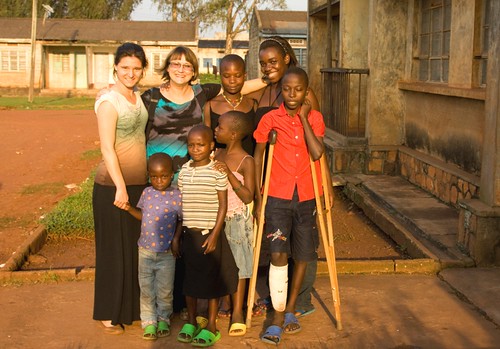
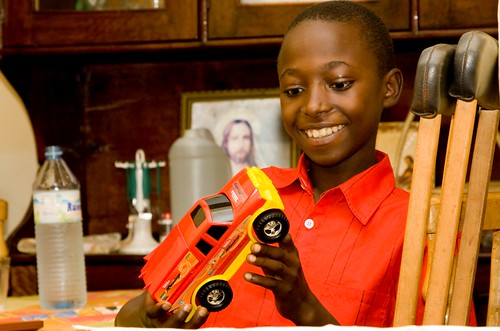
And so now you might also see why it is amusing that Richard, my 14-year-old with the chronically infected leg, has taken to locking the toys given to him by my mom, his Jaaja Muzungu, in the flimsy cupboard crammed to the side of the kid’s small sitting room. He of course lets his sisters and little cousin play with them, more than willing to share, but he eyes them closely, watching them for unnecessary roughness or absentminded placement, sweeping up the dump trucks and motorcycles, sticking them into the cupboard after playtime is finished with a big grin, chatting and laughing, his pleasure impossible to mask in finally owning the shiny and unique. For a kid that maybe only had two torn shirts and a pair of pants to his name some months ago, not even having a toothbrush, a book, a hangar, a towel, a bed, a sheet, a pencil, a jacket to call his own, he was understandably a little possessive in a manner unusual to the culture, humorously so.

And it was also amusing last night as the kids bent over a large map I bought them, staring I suspected for the first time at the outline of the world and its wide lands and spacious seas and mazes of borders and networks of rivers, having asked the kids to find Uganda, which they did after a short while then asking them to find America and noticing that my 16-year-old, Agnes’ eyes continued to search over Africa scrutinizing the names of countries and cities in its midst for the letters U.S.A.
“No,” I said laughing, “it’s over here,” pointing across the large laminated page to the far right explaining to her the differences between the continents and oceans, which I knew she understood because I had just read through the neatly-printed notes in her exercise book on the subject. I saw little lights in her head flickering on connecting what she had learned in school with the map. Then as we tried hanging the map on the wall my four-year-old Rachel pointed to the wall opposite where another educational poster hung of the human body and she said, “Mommy, skeleton.”

And I responded surprised and proud, “Yes, Rachel it is a skeleton.”

And she said, “Skeletons’ bad.”

And then I made a face and giggled saying, “No, skeletons aren’t bad, they are good. You wouldn’t be able to move without them.” She didn’t understand exactly what I was meant I am sure, but she knew what a skeleton was and she wouldn’t have known and maybe never would have known if it weren’t for my being there through strange twists of fate and all the tremendous, absolutely critical support I’ve been given from friends, family and especially my parents to help these kids, so many close to me giving to five needy kids they don’t even know on the other side of the world.

And then I looked back up at the four older kids all still crowded around the map showing each other different places, eyes glowing, minds buzzing, the whole world opening up to them and it became all the more clear that they had in fact never even seen a world map before, and MIA’s lyrics flashed through my head:

I put people on a map who’ve never seen a map

I showed ‘em something they’ve never seen

And I hope they make it back

And I felt as if I stepped into the song, feeling like I was giving these children tools to make their lives better, but knowing that I could only do so much and they would have to do the rest with what they were given. But I was hopeful, am hopeful that they will proceed wisely since I know how far they have come, watching their tremendous progress, their great strides, their hard work before my eyes, witnessing reminders of what they’ve gained from knowledge in school subjects to life lessons taught at home, learning geography and biology as well as how to take care of what is theirs, toys and maps, family and love.

Saturday, February 20, 2010

Rebounding in the Big Sky

Sitting in the back of the taxi van bumping along pot-holed, congested, polluted Jinja Road, beat-up cars and disheveled lorries and sagging taxi vans running past each other and bodas lining the road’s edges, I stared out the window into the grey afternoon, thick equatorial clouds squeezing the dark green hillsides. I had grown accustomed to the route having traveled often between Lugazi and Kampala, I knew all the rest stops, the speed bumps, the markets, the shanties. Watching the world rush by, the world now familiar, but lingering in the back of my mind, soon again to be foreign, I withdrew inwards, daydreaming, listening to my Ipod.

Big sky
I’m gonna hurt you

Big sky
you’ll remember this

Big sky
up above the rain

How can I ever put a stop to it
look you in the face again?


How could I stop? Where did I restart? Why was I feeling so disconnected? No, I knew, I knew: the uncertainty of my projects and the thieves trying to destroy them, the lingering strangeness of my surroundings and the impending shift from it. I was about to reemerge, about to surface from dark, cool waters back into my old comfortable life, entering a strange vortex of the familiar and foreign and what was once one would then, poof, become the other and it would be confusing and maybe a bit upsetting and all the while I was acclimating, readjusting to life as I had known it for decades before I would be thinking how are my projects going? what about the kids? but then how long would I think that 15,000 miles away; I might as well be on another planet as it certainly was a different world. I was drifting, losing sight, feeling worn and muddled.

When I’m breathing
When I’m sleeping

I can’t think of nothing else
All my longin'
All my waitin'

All the things you never felt
All weepin'
All my wailin'
All my standing on the shelf
How am I ever going to get through this
back to myself again?


I stared into the fields, the workers dotted along the hillsides, digging as they did everyday; I watched the vendors along the street side carrying baskets of fruit on their heads, pushing their wares as they did everyday; most here are without much choice as to what they do, performing their daily tasks without mind of the monotony; maybe there was assurance in the routine, maybe they felt grounded in the certainty of their habits.

But where was my center? What was holding me, what was holding all this together? I stared through the grimy taxi window dust and exhaust blowing in my face, looking into the billowing clouds masking the huge blue sky beyond and continued to listen.

Won't you say it isn't so?
Watch me fallin'
See me fallin'
I slipped through
the vortex of the sky

Darkness and light
That’s what’s inside
Darkness and light
It’s what’s inside

And in listening I recalled. I recalled what I already knew; what I had known all along. I just had to remember what I had forgotten…

The sky is limitless; a void of light and dark. Stretching as far as our imaginations, it reflects possibilities existing within all of us; a potential and nature revealed faintly in lives of want, and starkly in crushing need. I anticipated watching it vibrantly within others Here, but within myself….what will I do faced with the novel and unknown?

I wrote the above paragraph last spring, just a few weeks into my African stay, questioning who I would be when confronted with then unknown challenges while spending months on unfamiliar terrain; yes, within all of us is incredible potential for darkness and light falling across the span of our lives filled with endless possibilities in what we experience and encounter, and the one certainty in all the uncertainty is choice: how will you respond? Which will you be? Darkness or light?

The last couple of weeks and their corresponding blog entries have been the dark sequel to my story, the sort of Godfather II to my saga. Weighted and disappointed, bruised and disgusted, I entered the dimmest hours after months of slowly walking away from the light. I felt everyone around me to be suspicious, a society fat with poverty and corruption forces you to be untrusting, and my particular circumstances absolutely required me to be calculating and dubious, but in guarding your interests, in protecting yourself and that which you hold dear, you cannot forget the good, you cannot forget those around you who are honest and faithful and inspiring because then you are no longer a little bit of light, darkness has taken over.

In remembering this, in considering all this while staring out the taxi van, pollution and dirt whirling from passing trucks obscuring the peaceful emerald green horizon, I recalled a conversation that I am sure never to forget. A young American woman and I were speaking some months back about the extraordinarily unscrupulous things people will do here in the land of the have-nots: stealing from family members, leveraging disabled children, using charity for personal enrichment, etc. Then the hippyish teenager donning African jewelry and a long flowing dress, dirty feet and unkept hair whimsically said, “I love them even though I can’t trust them.” I watched her dance across the room after she said it, staring hard at her, I am sure my face furrowed in confusion, unable to decide if it was one of the stupidest or most profound things I had ever heard.

But in the months that I’ve been here I’ve come to realize it doesn’t much matter which you think the statement is, naive or compassionate, sophomoric or philosophical, childish or selfless, it is just true: here you learn to love people even if you can’t trust them, here you learn to love the darkness as well as the light; in a word you learn forgiveness.

Monday, February 15, 2010

Through the Looking -Glass

After living with Africans for nearly a year I was beginning to feel trapped in a wonderland; a wonderland of surreal characters speaking another language, some there to genuinely help me, others to genuinely hurt me, but all completely, utterly ununderstandable, their words at time falling on my ears like jibberish. I had to get away for a few days. I was finally, just absolutely having it – having it with Africans and their bizzare ways. I needed to step outside the looking-glass, outside the closing in absurdity that was Africa, outside my projects and their web of problems and regroup, refocus, re-energize; gain a brighter, bigger , more beautiful perspective. I felt myself growing hard, weighted, cynical; I felt trapped on the other side of a looking-glass.

The time has come," the Walrus said,

"To talk of many things:
Of shoes—and ships—and sealing-wax—
Of cabbages—and kings—
And why the sea is boiling hot—
And whether pigs have wings."


So I spent a few days at The Red Chili Hideaway – a compound just outside of Kampala frequented by ex-pats, back-backers and aid workers galore. I found solace in speaking with a menagerie of interesting travelers and volunteers from all over the globe: a young British lawyer working death penalty cases in Malawi who revealed the horrors the prisoners and people awaiting trial endure: 180 people packed into a cell maybe 30 by 15 feet, sleeping at night sitting up with their legs on the shoulders of the people next to them, a whistle being blown every few hours so they can all turn at the same time and rest in a different position on the concrete, dying in prison en mass because they only receive one meal of beans and maize meal a day and medical treatment days too late, all the while waiting five, six, ten years for trial; or the South African woman working outside Gulu in the north of Uganda on a rehabilitation project for former child soldiers/child mothers and her work in getting the community to learn a marketable skill, her teaching them bead-making so that they might earn their own living after receiving hand-outs from aid agencies for nearly a quarter a century, many not ever learning how to provide for themselves; then there was the crazy young British man driving his car by himself from England down to Cape Town, having received 15 flat tires through a rugged expanse of Northern Africa alone, and then of course the equally crazy couple of energetic South Africans on a similar journey, riding their bikes from England to Cape Town, and, of course, the even crazier American doing the same north to south journey on his bike, but alone, but the most insane of all I didn’t actually meet, I only heard of him as a bit of a backpacker’s legend: a single man of an unknown origin, paddling, yes, paddling his canoe or kayak through the war-torn, collapsed-government Congo.

Their stories were fascinating, invigorating, inspiring and soothing; swapping tales and thoughts with the aid workers was particularly therapeutic:

Yes, you just need to get away sometimes; it’s the only way to cope. Yes, you grow a bit hard, not entirely befriending the people around you. Yes, everyone is always trying to get something from you. Yes, it’s hard going back home; nobody else quite understands what you’ve been through. Yes, development books can’t really teach you about how to run sustainable projects. No. No. I don’t know what I am doing in a few weeks when my project is over either. I’ll figure it out when I get home. I don’t know what kind of life I want anymore.

And so it was. A gated compound filled with Western food, a miniature swimming pool, dorms, tents, flushing toilets, beat-up vehicles, and, most importantly, people who spoke the same language, who had the same dreams, fears, passions, challenges, hopes, worries, aspiration, uncertainties, highs and lows; a walled-in sanctuary, a brief encounter with serenity and understanding. But. Then. Back to the ridiculous and the duplicitous looming outside…

“O Oysters,” said the Carpenter,
“You had a pleasant run!
Shall we be trotting home again?”
But answer came there none—
And this was scarcely odd, because
They’d eaten every one.

But going back through the looking-glass this time I felt more at peace, more in piece, with a clearer perspective like glass perfectly cleaned remembering all of the good and not just the bad around me, and my conversation with my real family waiting patiently in California, just six more weeks and you’ll be home!, as always offered important reminders; you’ve helped so many people already, you have to expect some of these things are going to happen, even major corporations suffer losses.

And, as always, the best reminder was the children. Despite anything else going on, stealing, cheating, lying, backstabbing, rumors, gossip, power-plays, insincerity, lapses in logic, lapses in integrity, I can always, always find solace and happiness in the kids, their laughter, honesty, purity and genuine gratitude are a constant source of strength and joy.

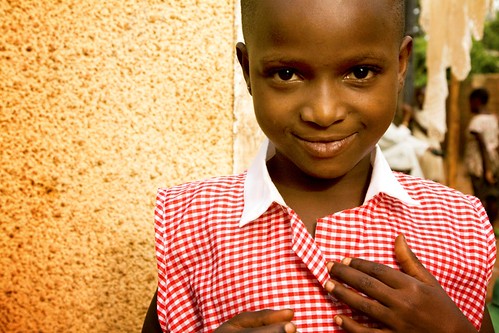
“Sylvia. Put on your new uniform so I can take a picture,” I asked my eight year old yesterday after returning from Red Chili, my little girl who didn’t know a single letter or digit when we took her in last summer and within a period of a few months learned enough to spell simple words and complete basic arithmetic; I was incredibly proud of her as she was of herself. She had been advanced from nursery school to primary school after one three month term and I knew she loved her new, big-girl school’s red and white gingham uniform.

Sylvia ran inside the house to put on the dress then me and her and the rest of the kids played and laughed in the late Sunday sun before I slipped to the children’s village with Aunt Jennifer to check on the land we had cleared and planted on behalf of the kids to ensure their food security when I leave in just a few weeks; happy children, growing food, bright futures… I felt okay despite all the troubles, all the absurdity...

The sun was shining on the sea,
Shining with all his might:
He did his very best to make
The billows smooth and bright--
And this was odd, because it was
The middle of the night.

part of the land we have cleared to plant crops for the children


Thursday, February 11, 2010

The Matrix: In and Out

There are fewer things more difficult in life than finding yourself caught in a set of circumstances that force you to operate in a fashion that goes against your very nature, to find yourself confined in a situation that at once highlights the characteristics that comprise you at your core and also forces you to control or alter those defining qualities; it is a challenge of one’s strength, will, fortitude, resourcefulness and ingenuity.


Say, for example, you have been moving through your life, your entire life thus far, going to school, getting a job, starting a family, retiring, becoming grandparents, and so on, playing out patterns of existence, and then one day, like a shocking jolt, you realize it’s all a ruse and actually nothing was as you had always perceived it: rather than individuals carving unique paths, you were drones following a nefarious plan; you and everyone you knew were not people in cycles, but a cogs in wheels; you were not living a life, but stuck in a matrix.


How do you pull yourself out of the matrix? Could you even have the correct set of tools to guide you? Everything you knew until just now was just wrong. Maybe you would ignore the new found reality, pretend that you didn’t know - that everything was as it had always been? Maybe you would just hope that things would continue as they had, as if they didn’t require some kind of massive, scary change for everything to be right.


For those of you who might have been on this site a few days ago and now see, strange, a missing entry, no, your eyes are not deceiving you, and no, there is not a glitch in the matrix. In fact, I had posted a blog some days ago, but the evil machines are again looking for any opportunity to separate the muzungu from her money and some of those machines are at least partially computer literate and know this website; as such, the post was removed as it is not the time to reveal any information on the matrix that could be used against me.


So what is so difficult here? Everything and nothing. Like the matrix, most people here are not what they seem – you have to look closely, find the patterns and inconsistencies to know the truth. Everything can come crashing down if not played properly, and so I move with caution to ensure the machines will not continue to suck energy from me and my projects, but I have confidence as I have swallowed the little red pill of truth and have learned my true nature and how to control it… and so, yes, I am now for the remainder of my time here in an alternate reality, wholly untrusting.

Tuesday, February 2, 2010

Songs and Subtext

My January blog entries were titled and inspired by some of my favorite songs, weaving their lyrics and themes into my text as I felt I was at moments living their meanings and tones. So you might have a better understanding of the entries' significance, particularly if you were not already familiar with these pieces of musical and lyrical genius, below are links to the songs on YouTube.

A Thousand Beautiful Things

Space Oddity

Mother and Child Reunion

De Do Do Do De Da Da Da

Wednesday, January 27, 2010

De Do Do Do De Da Da Da

Don't think me unkind
Words are hard to find
They're only cheques

I've left unsigned
From the banks of chaos in my mind
And when their eloquence escapes me
Their logic ties me up and rapes me

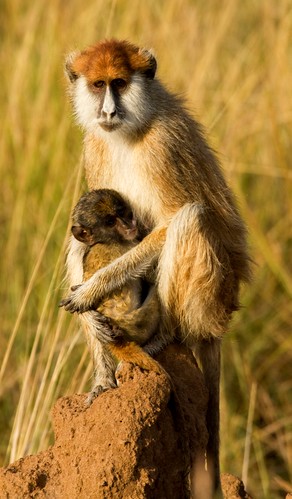
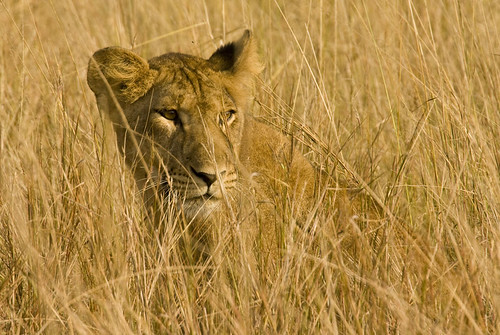
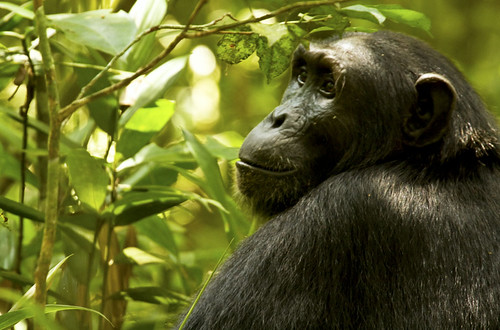
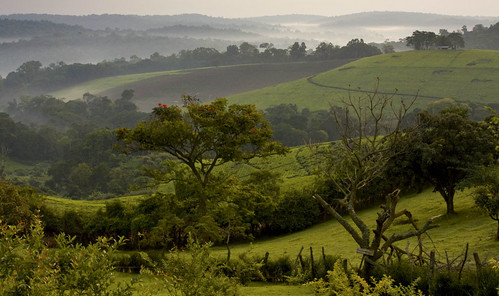
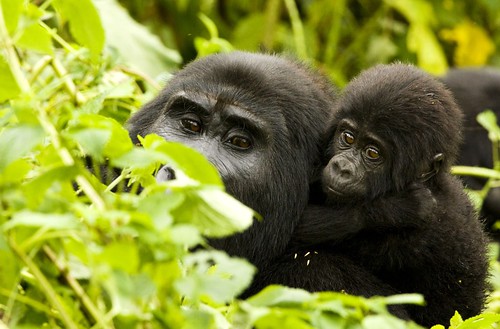
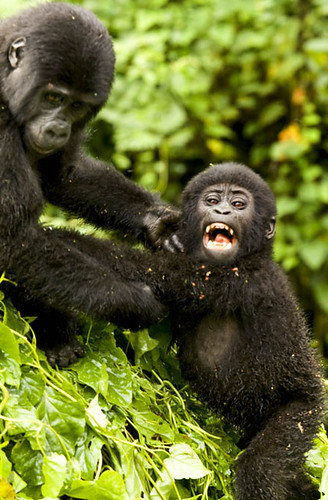
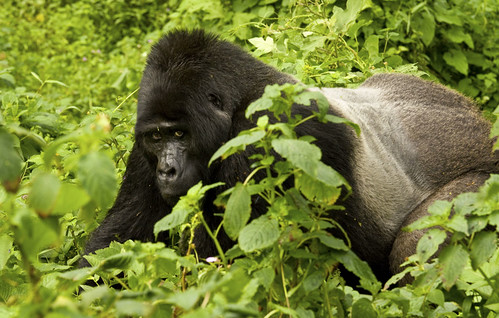
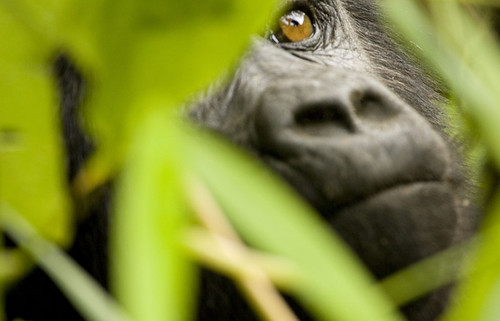
Apologies. I am still too exhausted from a twelve-hour ride over bumpy, dusty African roads from Kisoro, a town tucked between the misty and mountainous southwestern corner of Uganda adjacent to the Rwandese and Congolese borders, to think of anything even remotely clever to say about me and my mom's 10-day safari to four of the biggest game parks in Uganda, Murchison Falls, Kibale Forest, Queen Elizabeth Park and Bwindi Impenetrable Forest. I am also still a bit too overwhelmed by the experience, particularly the gorilla tracking, to acheieve any appropriate level of eloquence, so I am letting my photographs speak for themselves. Below are some of my favorites. You can view all of the pictures here.

De Do Do Do De Da Da Da is all that I can say to you...


Thursday, January 14, 2010

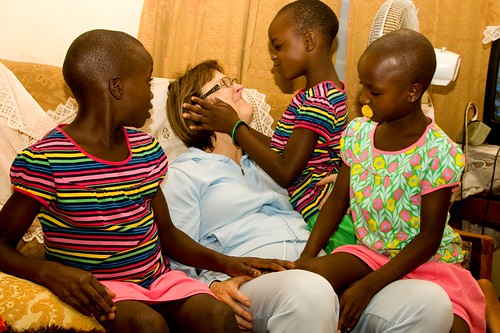
Mother And Child Reunion

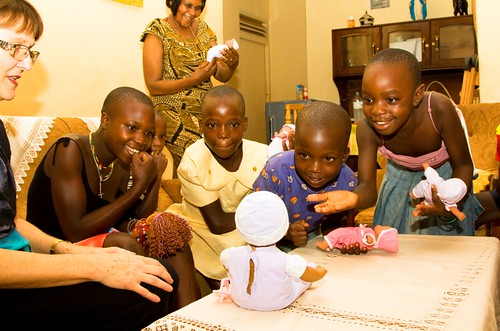
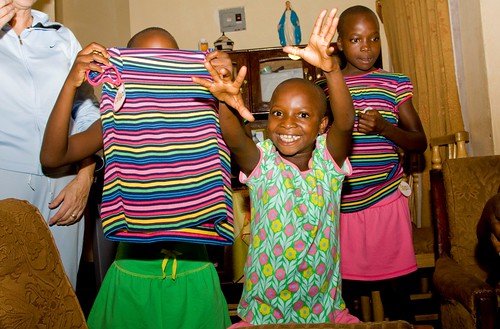
She crossed continents and seas secretly, a suitcase of gifts in hand

Greeted by the young curiously, another from distant lands

Sweet dolls and shiny trucks swiftly charmed the eager gaggle

One baby, oh it can’t be! even turned and babbled

Skirts and shirts bright and tagged, again more dancing smiles

And it was uttered jah jah burungi! not long after a while

And things till now unseen, oh so many! brought with the fair elder

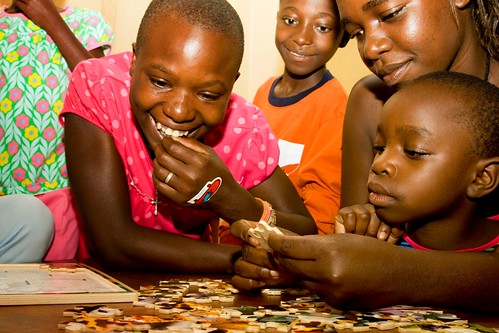
Coloring books and waxy crayons and puzzles to put together

And private hires with seats clean and music clear, again a novel joy

And a picnic on the lake still and wide, more welcomed than a toy

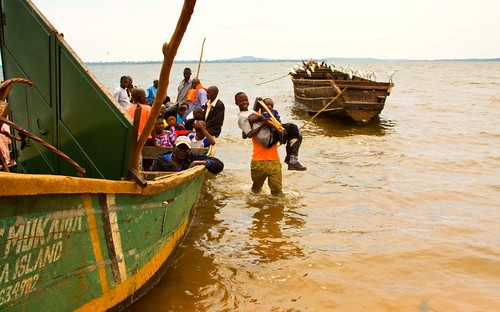
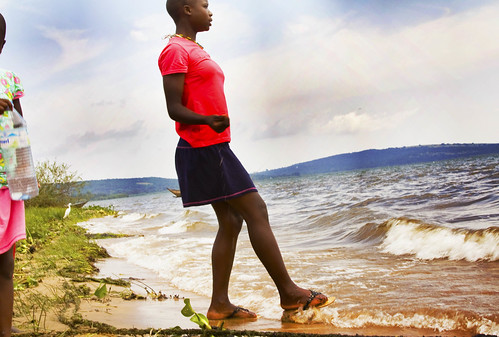
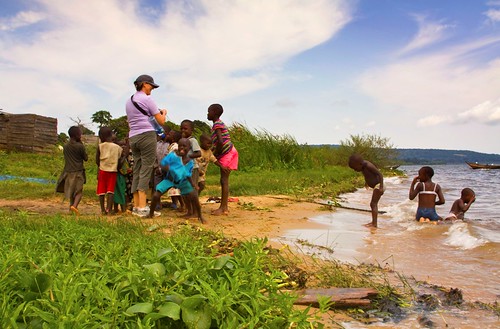
And can you believe? A boat delivered to the island wrapped in surf!

Seems strange to say, but none had watched water lap the turf

And of course there were stares and laughter and tenderly dipped toes

And then running and jumping and freedom as the water flows

But the long blissful splashing followed an improper investigation

Not till later was it realized, a likely bilharzia infestation

No wonder the island children watched we sighed, but matter it did not

For yes it was achieved that which was so long after sought

And for them and us and another birthday, yes me, I could not pretend

Watching it all, reunited, I recalled the course of a lifetime runs over and over again


See all pix here

Thursday, January 7, 2010

Space Oddity

You change here in pieces, in small, at times unperceivable ways. The change is quite fluid, quite peaceful and quite easy… if you are open to it. And if you are willing, one day you can awaken to the realization that you occupy a very different mental space than before did prior to setting out on your odyssey.

As you’ve been plotting and toiling in one space, you’ve also been floating along in another, going in a very different direction; and you may look back at yourself in the most peculiar way. And though your new space may seem far, beyond 100,000 miles, you will feel quite comfortable, in fact, very still, as if your spaceship knows which way to go.

Over the months in the land that was at once new and strange you will have seen roads and hospitals and schools and stores, and you will have listened to music and speeches and radio and conversation, and will have eaten bread and mangos and rice and bananas, in fact many bananas, and everything will resemble what you knew from before, but will look and sound and taste very different today.

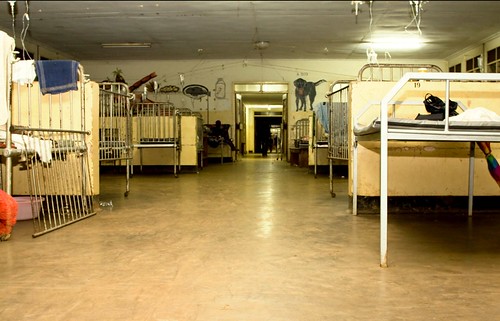
And you will see glimpses of people who once surrounded you in the old space, maybe you will be reminded on Aljazeera, maybe you’ll watch a woman complain about having to keep her job because otherwise she can’t afford medical insurance, which she needs because she is being treated for an aggressive form of breast cancer and into your mind floats the prayer service you attended last Easter at your Ugandan auntie’s house and how an old sick woman was brought up to the make-shift stage by the outrageous pastor who claimed during his hours-long sermon choked with blood-boiling mendacities (such as his ability to cure people with AIDS) that the holy ghost told him there was a woman with breast cancer in the midst (although your better logic tells you the auntie of the house simply told the man this), and the pastor goes on to say he doesn’t like surgeries and commands the frail woman to not pursue her one treatment option, which is a mastectomy in a land without proper chemotherapy and radiation, and, in fact, the pastor then throws his hands in the air and claims with unabashed arrogance he has cured the old woman too! and everyone in the flimsy lawn chairs begins clapping like a bunch of fools at a circus while you fidget wildly, nearly uncontrollably in your plastic chair hoping the holy ghost also has the mercy to drop the murdering pastor dead right then and there on the stage while everyone is appropriately cheering; and as you relive this memory, at the same time you recall all the hospitals you’ve frequented these many months and how patients are packed into wards (of course never with nurses who properly care for them, or machines that monitor their vitals, or specialist to treat the sickest), and you remember just last week the man lying in the cot at the foot of your boy’s bed and how the man suddenly began flailing violently while his whole family (who appeared from their traditional clothes to be from deep within the village) stood watching not doing much of anything because they presumably didn’t know any better, so you went searching for the nurse and she didn’t seem to understand the word seizure so you shook demonstrating for her and she calmly replies the man was cold and you are like noooo the man wasn’t COLD, so you find the short doctor with the funny round spectacles and he injects something into the man’s IV and as you resume just staring, staring into the huge room in need of paint, full of sick and dying people surrounded by their family members resting on the concrete floor because there are no chairs and no spaces of comfort in these hospitals, the man laying so near seizes again, only this time harder and so you find the doctor again, but soon thereafter you leave, so you aren’t quite sure what happened, but a couple of days later the man in the bed just a few feet from your Ugandan son’s isn’t there anymore, the space empty and you don’t know why or where he has gone and you really don’t want to ask; and maybe just now, at the same moment you are watching the news programming with the complaining woman and remembering the sermon with the deceitful pastor and reliving the hospitals with the scores of dying people, there is an out of work African man (as if that needs to be said) staying in your home with growths squeezing numerous organs in his body and there is really only one hospital in the whole country with the oncological abilities to assist him and he would be lucky to ever be admitted and luckier to ever afford treatment because most others here (in fact millions of others here) are never diagnosed and just die unknown deaths quietly in villages and maybe you think that the woman on the TV wearing the nice clothes and nice jewelry sitting in the nice home shouldn’t be grumbling about how she has to keep her job with good pay and free medical insurance so she can continue to receive the best treatment on the planet while there are millions (in fact billions like stars in the universe) who would never be so lucky as to complain about such a thing, including a person sleeping under the same roof not more than several feet from you.

And that man, like all those now crowding your new space, just accepts things as they are, everything about his and their lives, including his and their deaths. And you become more accepting too, not trying so hard to change everything, and that tolerance affords a certain peace as you continue to float along in your spaceship. Here in the new space life is very real, nothing is figurative; metaphors, like treatments, are luxuries. Here is the space of the literal.

Planet Earth is blue and there’s nothing I can do

And while it may seem bizarre and nightmarish to those who haven’t left their capsules, the new space is not without its merits, it’s not always despairing or discouraging or depressing, and you realize it is not because here you are never alone, never isolated, although this may appear contradictory to the inexperienced; in fact, you will awaken to see that you are not, nor ever were floating by yourself. Occupying the new space is a sweeping sense of community and family as vast and novel as the cosmos; one that abhors individualism, in some ways for the worse, but in many for the better, and loneliness and alienation are largely unfamiliar; and therefore everything in the new space has a different sense and worth; and when I speak to people filling the space here, their understandings at many times would be an oddity to you. And for that matter it would be an oddity to the person I was.

Planet Earth is blue and there’s nothing I can do

Saturday, January 2, 2010

A Thousand Beautiful Things

After visiting Richard in the hospital in Buikwe the afternoon of New Year’s Day, him still recovering from surgery the week prior, I arrived back in Lugazi to fetch some food from the open air market in the town’s centre. While making my way back home to start dinner I practically ran into my friend Sandra.

“Sandra! How are you? I haven’t seen you in so long. How was your Christmas?”

“It was good,” she said smiling.

“How was your New Year’s?”

“Well, right now I am going to visit some patients.” I knew that Sandra often paid hospital visits to people who worked on her community projects who fell ill.

“Who’s sick?”

“Well, I don’t know them. I am going to the children’s ward,” she replied holding out some sweeties.

“Oh, that is so nice of you! Actually, maybe Peanut and I will go. Let me run home first and drop off these things. Flash me when you are arriving at the hospital.”

Okay.

As Peanut and I walked through the thick muck saturating the ground and splashing onto our clothes, I asked her if she knew why we were going to the hospital. She didn’t know.

“Okay. What do people do on holidays like New Year’s?”

Peanut gave me a strange answer about learning and reading.

“Umm. Not really. Don’t people eat good food on holiday and go to church and go to the villages and see their family and friends?”

“Yes!”

“And what is that? It is fun, yes?”

“Yes.”

“Well imagine if you were in the hospital. The hospital isn’t very fun, right? You are sick and don’t feel well and maybe you are scared because you have to have surgery.”

“Yes.”

“So we want to go say ‘hi’ to these children on New Year’s when everyone else is having fun and they are scared and sick in the hospital.”

“Yes!” Peanuts agreed wholeheartedly swinging my hand in hers.

We arrived at the hospital in Lugazi, which is not more than a third of a mile from our house. Night had blanketed the sky deep indigo and the long narrow blocks of the hospital dorms lit up with lousy florescent lights. I entered the block painted Pediatric Ward on the side.


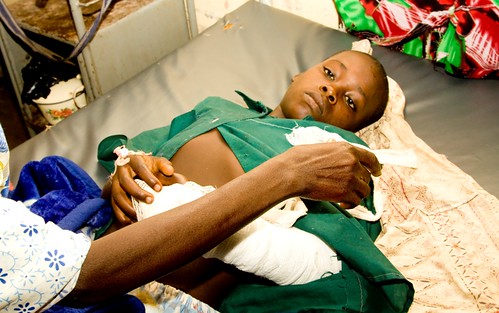
Sandra was leaning over the railing of one of the beds looking down at a boy lying placidly on his back, his arm wound in white bandages and gauze.


I followed Sandra’s example approaching the rows of bed, most fortunately empty, wishing the children and their mothers and caretakers a Happy New Year. I handed them packets of biscuits and spoke with them briefly. Many told me the cause of their hospital stays.

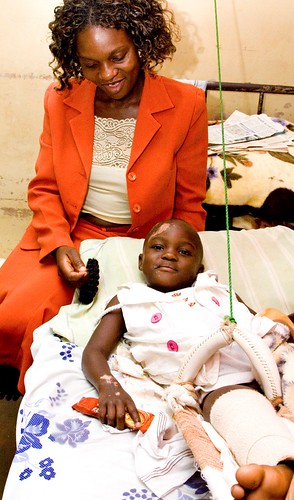
An unfortunate victim of an all too common occurrence by the notoriously careless drivers, little Masa had been stuck down by a boda on the 21st and would remain in the hospital considerably longer in traction. Her mummy showed me her x-ray: a completely severed bone.


“Oh! You poor thing! Was the bone sticking out when she was hit?”

“Yes.”

“Yeah, that’s a compound fracture. Oh! It must have been so painful.” I turned to the little girl. “But you’ll be okay.”

The four year old smiled and said brightly, nearly bubbling, with surprising conviction, “Yes! I will be okay!”

I laughed and patted her. “You are so kanyama!” Then the mother laughed at me, surprised at my knowledge of Luganda.

“Yes, she is very strong.”


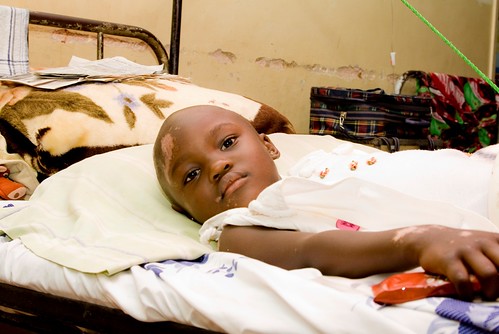
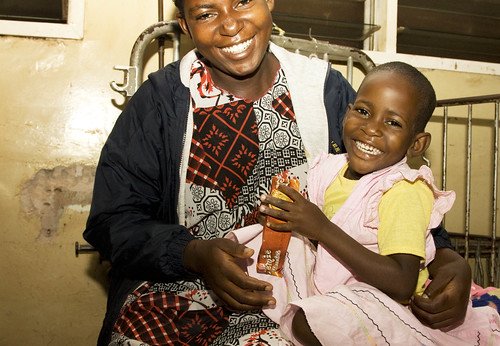
I moved to the other beds, mostly filled with babies and toddlers with malaria hooked up to drips, their mothers patiently sitting at their sides. One poor mother had two patients in the hospital, a baby with malaria and a young boy who looked like he had also been hit by a boda. Covering his abdomen was a large open sore, which fortunately appeared to be healing well and the child seemed to be in good spirits, squirming on the bed and laughing while I took his picture.


Other children were also recovering and happy.


But other children were sick and sad.


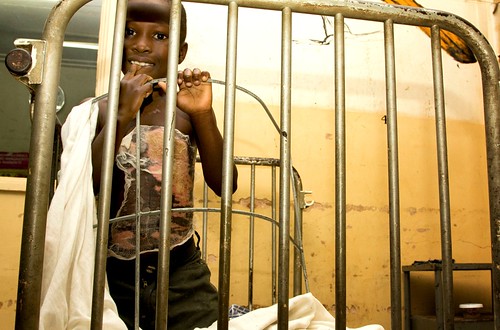
Still others were scared of buzungus.


Later that evening Peanut sat on the couch of our home while the TV played unwatched in the background. She looked up at me as if she wanted something.

Chi Chi?

“I want to watch videos,” the girl told me.

“You don’t want to watch TV?” I asked surprised. She shook her head. I laughed. “Okay. Come.”

She followed me into my room and I loaded on my computer a collection of Annie Lennox videos, which much to my amusement, the girl loves. She sat in my room memorized with the monitor, singing and dancing as I put away clothes laundered earlier that day.

“You go to the next one. I don’t like this one,” she said as another video queued.

“Noooo Peanut. I am not skipping through this one. This is a very good song. It’s one of my favorites. It’s about gratitude. Do you know that one, gratitude?” Peanut shook her head. “It means thank you. It is being thankful for something.”

Peanut looked at the video skeptically, but with more interest; the soothing notes continued to float through the room.

I thank you for the air to breathe, the heart to beat, the eyes to see again

“You see. She is saying thank you for being able to breathe, to have a beating heart, to be able to see. She is thankful for simple things, for being alive.”

I looked over at Peanut as I stuffed socks into my drawer. She had been standing, but suddenly sat watching intently. She began singing.

The world was meant for you and me to figure out our destiny

To live to die to breathe to see to try to make your life complete….

A Thousand Beautiful Things