Monday, June 15, 2009

Yes, It’s Here

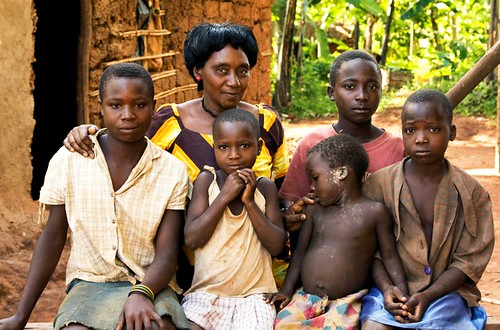
Maybe the cutest kid in the world. Ester’s niece paid us a visit earlier this week. At first Jennifer was very apprehensive around me, preferring to take dinner on the ground of a small, dimly lit back room to having me look at her at the table, but she eventually got use to my paleness and then wouldn’t leave me alone. She is extremely clever, a bit mischievous, very energetic and cute as a button, what’s not to love?

I had to start with something light before moving onto today’s real topic, HIV/AIDS.

The disease exists in America, but it is not a part of the fabric of general life. Here it is more than just a series of enigmatic letters; it is everywhere, but somewhat obscured. You hear of your neighbor dying leaving her orphans with the crippled grandmother. There are whispers of unfaithful spouses passing it to each other, and witchdoctors infecting unsuspecting female victims practicing their phony craft. And you do see it in everyday life, but mostly in absence; the almost total lack of people in the villages between the ages of 20 and 50.

It’s so common that it’s sort of just another thing. In the West we hear AIDS, and it has an aura of mystery and horror. Not here. Here it’s like, yeah, he has AIDS, or she is sick, and it’s understood to mean she is sick from AIDS. It’s so common, that if you ask an African if they would rather have AIDS or cancer, I would be very surprised if you could find one that would prefer the latter. At least there is good therapy for HIV/AIDS, not so for cancer. African cancer treatment almost exclusively involves lobbing off affected body parts; for the masses there are no oncologists, radiation treatments, chemotherapy, quality methods of testing, experimental trials, etc., just a saw and a rosary; but there are AIDS specialists, ARV drugs and HIV test kits.

Fortunately for Ugandans, they are more upfront about revealing their status compared with many other Africans. A testament to their government’s decision to combat the epidemic head on about a decade ago, while other countries, such as Kenya tried to sweep it under the rug so as not scare their population, and especially rich foreign investors and tourists. Despite the continental pandemic theoretically starting here in the 1980s, Uganda has a relatively low rate of infection, publicly around 6%, but realistically closer to 15%; some southern African countries have as much as 33% of the population infected.

Free drug therapy and counseling is available at government clinics, another reason for the relative success of controlling the disease. The international development community has really pushed treating sub-Saharan African HIV/AIDS patients in recent years, which is a wonderful, but extending someone’s life with expensive medication is really not the solution to the devastation. Here in Uganda, there is a far greater focus on treatment than prevention, which I believe is how HIV/AIDS is addressed across Africa. Prevention is of course significantly less expensive than therapy, and actually saves lives, doesn’t just prolong them; which, makes the heavy focus on treatment rather frustrating to me.

In my 10 weeks here I have yet to witness a single TV ad, radio spot, billboard, poster, anything urging practicing safe sex. I haven’t even seen any such material in the hospitals and clinics. This is just abysmal. There is not a total lack of prevention effort; for example, I believe HIV/AIDS education is a part of the every school curriculum, but in my limited experience and humble option, the prevention message is not nearly strong enough. Why wait until someone is ill to help them? Why not put more resources into preventing them from dying in the first place?

As other examples of prevention in action here, you will very rarely see condom dispensers in bathrooms, and all government clinics in theory supply them, but I have yet to see a dispenser with an actual condom in it, and Ugandans tell me that the clinics are usually out of stock as well. As additional anecdotal evidence, I recently read an article in a Ugandan newspaper written by a woman documenting her quest to find a condom one afternoon. Of course, there were none in the bathrooms, pharmacies or clinics; she had to request one from a bar and could hear the barkeep and customers snickering as she left.

And the problem extends beyond simply getting protection. Even if you have a condom, it is not always easy to persuade your partner to use it. The younger generation, particularly the educated, practice safe sex, but even among them it is not necessarily the rule. The aversion to condoms means that people continue to pass the virus freely, and given the lax attitudes about extramarital affairs, often to their spouses. How is a married woman supposed to ask her husband to use a condom? Unbelievably some, I believe few, but some even pass it knowingly, not caring if they infect others.

Another serious obstacle to prevention is religion. Some religious leaders condemn condom use, including the Pope. Africans are very spiritual and follow their religious guides in a manner unlike most Americans, where comparatively speaking modern life has greatly reduced religious power and persuasion. AIDS here is a war. No exaggeration. It kills, orphans, impoverishes, maims and scars on an incomprehensible, massive scale just like warfare, and the only way to end it at this point is through safe sex. Telling people to not use protection ensures more death and destruction, fueling the war and should honestly be a war crime. It is beyond irresponsible and insensitive to tell Africans not to use condoms. It is inhuman and criminal.

Seeing what this disease does to humanity, I feel the problem is as much ours and as theirs, and while the West offers assistance, it seems somewhat misguided. The fact of the matter is that it is difficult and uncomfortable, especially for Western countries, to address prevention issues because it means confronting sexual habits and convincing people to change; in other words, trying to alter widespread cultural practices, which sort of reeks of we’re different than you, and oh yeah, we’re also better than you, so be more like us – an attitude the Western aid workers rightfully abhor.

Foreign aid groups advertise their AIDS drugs as being inexpensive, but they usually do not provide the full details on treatment costs and challenges: the testing, counseling, other drugs required to combat infections and reduce treatment side effects, monitoring viral load and adjusting medications as necessary, etc. A few years ago the WHO estimated that it costs $1,500 to prolong the life of an AIDS patient by one year. Again, it is fantastic that the West is providing this treatment, without it there would undoubtedly be more orphans and more misery. But sadly we’ve decided for Africans that it’s easier to give them drugs when they are already sick, than talk to them about sex and condoms while they are healthy. This is dreadful, and not an excuse for not doing more in the name of prevention. If cigarette companies can still convince new smokers to buy their well-known lethal products, surely we can develop PR and community outreach campaigns that alters sexual habits to some degree. Instead foreign aid often ignores this route and privately throws their hand up in the air admonishing African culture as backwards and incorrigible.

In utter honesty, if not political correctness, African sexual practices and attitudes about protection must change to curb the pandemic that is devastating entire families, communities, the continent. Western media has rightfully highlighted the disease’s wreckage and reveals to us cold statistics and facts, but it is difficult to put it into context. Being here and seeing orphan after orphan, hearing of death after death weaves a human story into the abstract threads. I hope in the coming weeks and months to recreate what I witness here, so that you may also have some faces to coincide with the numbers.
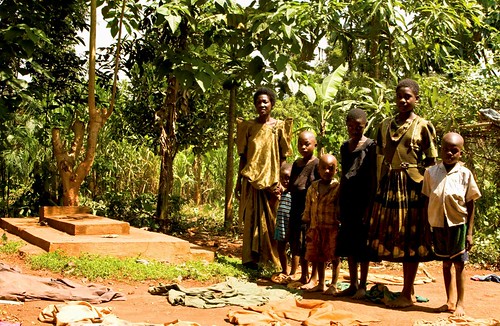
As an introduction of what to expect, above is a picture of a woman in Wakisi with some of the grandchildren she looks after. They are standing next to their home and her son’s, their father’s grave. You surely have heard of the plight of AIDS orphans, but the other silent victims are the elderly; ill and frail and forced to look after their grandchildren after watching their own children die.


Thursday, June 11, 2009

What Am I Doing Here?

This will be Part I of Many, I'm Sure. I’ve had a few moments here where I am like, what in the hell? WHY? Why am I not spending my weekends by the pool sipping mojitos and my weekdays at a nice air-conditioned office, my clothes not covered in mud, my fingernails not filled with dirt that never entirely comes out and my meals not of lots of carbs and a little meat of mostly gristle and animal parts I would only see in biology class. Moments like this:

So maybe you wake up in the morning and are excited to see two of your dearly beloved mangos, which have been missing from the house in recent weeks, in a bowl in the bottom of the fridge and you start eating one and realize it is rotten on one side, but you take a few bites from the good side and then are like, this tastes a little funny, so you start eating the other mango in the bowl and when you are almost done some white jumping things in the bowl catch your eye, and you look closer and they are little maggots, and you know right away it was from the fruit that you started to eat, so you cut the rotten portion open and see yes, maggots inside, and maybe you just got over malaria (or you think you got over malaria, but you don’t know until later that you still are sick with it) and you really don’t want intestinal parasites in the wake hospitalization, so you call your doctor friend to ask about the bugs, but he doesn’t pick up, and while the maggots maybe harmless, you want the chance of falling ill as close to zero as possible, so you grab the large pot from the kitchen that is used to boil amoebas, typhoid and miscellaneous bacteria from the drinking water and bring it into the tiled room that serves as a bathing and laundering area and begin making yourself vomit into it, because the toilet in the small room next door doesn’t flush well and is generally full of floating, gelatinous matter that doesn’t appear sanitary and you really don’t want your partially digested mangos hitting the filthy water and splashing back in your face, maybe into your eyes, nose and mouth, so in the shower you stand over the pot for maybe 20 minutes trying to get everything out of your stomach, grateful that all you’ve eaten in about 12 hours are the infested mangos.

That actually wasn’t the what am I doing here? story. That incident was actually pretty amusing to me. The story that made me go, oh Africa! was this one:

I was staying the night at an aunt’s home in Kampala, a nice home. I was in the sitting room wearing jeans and a long sleeved shirt with its hood over my head; only my face and the tops of my feet exposed. After a half hour, I noticed I had about five bites on one foot. I tell my African friends now that the best way to ensure they don’t get bit by mosquitoes is to have me in the room. Mosquitoes have a real special affinity for me, and it is most certainly not reciprocated. So around nine in the evening, sick of my skin being lovingly sucked by the pests, I went to bed to read under the safety of the net.

But while reading I kept hearing a buzzing noise. Paranoid of the nasty blood-suckers, I scanned the folds and holes in the net trying to find the critter that I just knew was there. And there she was. After two tries, I successfully made contact, but she just fell to the ground and I wasn’t sure if she was outside the net, plus the buzzing continued. So to the kitchen I went to find DOOM! bug spray while everyone else in the house slept. I mean, I really don’t want to get malaria again. I turned the switch on and heard plates crashing, and then something ran across the counter. It stopped and starred at me momentarily; the biggest rat I have ever seen. This isn’t saying much since I never see rats, but it was slightly bigger than a well-fed squirrel. I screamed and ran back to the bedroom and slammed the door.

Emma, a cousin a few years younger than me, was on the top bunk and awoke.

“What’s the matter?”

“There’s a rat in the kitchen this big!” I said gesturing so that my hands were almost a foot long.
“That’s a big one,” she said as she rolled over and fell back asleep.

I stared at her back for a while. I was surprised she hadn’t jumped up to rescue. I am not sure what I thought she would do, but I didn’t think it would be going back to sleep. I shrugged and climbed back under the net on the bottom bunk and lay there constantly slapping at my body and waving above my head like a mental patient, preferring the possibility of sharing the space with a mosquito to the rodent- feline hybrid snacking on leftovers in the kitchen.

So, I promised myself for every bad story to tell, I would share a good one, which isn’t difficult. Life here, each day in fact, is serious of surprises, at times brilliant highs and disturbing lows. The same day as the holed bed net- mosquito-rat trifecta, I got to cuddle with a three week old baby. The family I was visiting had a house girl who just gave birth, and I didn’t realize the infant was there until the second day of my stay. The girl brought the precious boy into the sitting room that afternoon wrapped in a soft, white cloth. I immediately clobbered him. As I lay on the couch watching TV, he rested on my abdomen, his tiny face lying against my skin listening to my heart as he drifted off. That night I fell asleep with the annoying buzz of the mosquito, the lingering scent of a newborn and a smile on my face.

No, Really, What Am I Doing Here?

I’ve had people ask why Africa? Why are you going there for community work? It is a valid question; need exists in every community the world over and one doesn’t need to travel 13,000 miles to give back. (I hope all of you are involved in a project near you!;) My decision to volunteer abroad was partly due to my personality and sense of adventure, as well as my enduring interest in African culture, but mostly because I desired to experience and alleviate in some small way the need here; its scope and depth beyond anything we could witness in the West. I knew living among it would be life changing, or at least affirming, and I can say it has more than met my expectations.

My work with the SACCO in the villages has finally resumed since I fell sick. I wake up in the morning and travel by taxi for about 45 minutes to the edge of Jinja, the Nile Brewery stage, and then board a boda boda to take me via another, thankfully, paved road to the SACCO office in Wakisi Sub-county.

our humble SACCO office


I met the board members there so that we can travel together further into the villages and so I can pay for their travel as they don’t have a few extra shillings for their own way. We then walk back to the road to board a taxi to take us down the paved road away from Jinja. The taxi drops us off after say 10 minutes then we ride boda bodas on narrow dirt roads into the villages. This is one of my favorite parts of the day; sweeping up and down gentle slopes through the villagers’ maize, plantain and bean fields, by their self-made homes, sometimes of concrete paid by wealthier relatives in town, or traditional construction of mud and branches, they wave at me as they perform their chores in their dirt yards, the children giggle and shout, “Goodbye!” or “How are you?” as I glide by.

nicer homes across from SACCO office


Yesterday we traveled to a village resting on the edge of a tea field, which are vibrantly gorgeous crops that paint the landscape in surreal greens and textures. Before the land gave way to the sea of tea leaves, we wound through a portion of protected forest, the vegetation dropping over heads fully shading the winding road. Women slowly passed us with babies dangling from their backs tucked in cloth wrapped around the women's waists. My co-worker sat cramped on the back of the boda boda with me and said, “It must be inoculation day; all the women walking with babies.”

tea field


Before the meeting along the edge of the tea field, my co-worker took me to a school down the road to pay a visit to the kids who, as usual, were out of their minds with excitement to see me. I took several pictures of them, and they kept shoving each other to see the exposures in the camera. I said, “No pushing!” They politely stopped. On the walk back down the road they followed me whispering and laughing to each other; I could hear them imitating me saying “No pushing!”

schoolchildren posing


The SACCO board’s community outreach involves each of us giving a speech on how the SACCO operates, its contribution to the community and reminding them that it is now backed by the government, assuring greater accountability and security. We meet in any area that is conducive to gathering about 50 to 100 people: in a barren brick room, a primary school classroom, under the shade near shops, in a clearing along a tea field. Most in the audience are elderly since the SACCO used to be the Wakisi Elderly SACCO, but after its recognition by the government as the official SACCO of the sub-county, it has opened its membership to all adults in the area.

elderly man at meeting


During my speech I tell them why I am in Uganda, why I am in Wakisi in particular, how the SACCO will help them, and how it should be used; reminding them that it is a tool, and like any tool, it requires responsible use to benefit everyone. I also remark on the women’s involvement. I say that I am happy to see women at the gathering since I know sometimes they are intimidated or maybe discouraged by community-wide endeavors, particularly ones that involve money; and that developing countries around the world have been using community-based lending and saving institutions to overcome poverty for decades, and through these years of experience, the international community recognizes that women are generally the best recipients of small loans since they use the funds most responsibly, to help themselves and their children and not carelessly waste it on booze or other vices. The women always start clapping at this point. They usually sit expressionlessly listening, but hearing this makes their eyes light up in pride. Most of the men usually start clapping too understanding its truth.

meeting at tea field, co-worker in chair


In addition to assisting with their mobilization effort, I am also trying to secure life-safety items to sell through the SACCO at subsidized rates. For instance, bed nets are a necessity here, helping to combat child mortality at the hands of the malaria parasites. The nets can be purchased for about USh 15,000 or about $7, which is prohibitively expensive for most villagers. I am hoping to buy nets in bulk and sell them through the SACCO for about USh 1,000 or $0.50.

This sounds simple enough, but providing bed nets has its challenges. For example, many of the villagers don’t have beds. As such, there is nothing to drape the nets onto, not to speak of the discomfort and inhumanity of people forced to sleep on the hard, dirty ground, which is why I am also hoping to buy mattresses in large quantities and resell them at a price affordable to the community.

Now you may be wondering why these items can’t just be given to the needy? They can, but documented development projects worldwide, and Ugandans’ personal anecdotes suggest that it’s sometimes better for people to pay a small amount for needed items, rather than have donated for free (with the exception of things like say medical care, vaccines and counseling). Making a small sacrifice for bed nets for example, provides greater assurance that the community will use them to protect themselves from mosquitoes, and that the men won’t fish with them, the women won’t get married in them, the kids won’t play with them. It also instills a sense of ownership and pride that they have worked for something and purchased it themselves.

The villager’s needs are truly overwhelming. I tried to capture their destitution in my Village, Town & City blog, but it’s difficult to envision its intensity and scale without seeing it firsthand. I could help build schools, clinics, community centers, latrines, boreholes, coordinate outreach sessions on family planning, safe sex and HIV, malaria, agricultural best practices, nutrition, sanitation, or set up sponsor programs for school children, orphans, the elderly, the widows, or those without marketable skills, which is almost all of the 37,000 people in the area. I am focusing on supplying life-safety items for three reasons: one, it can benefit all of the families and communities stretching across the sub-county, unlike building a structure in one area; two, buying and reselling products is easier for me to coordinate than construction or education projects; three, and very importantly, this project’s success is not contingent upon donor sustainability, which is important since I am not sure how long I can stay.

child sitting on steps of nicer home pictured above


There are many other items that the villagers need that could be a part of this program, like blankets, seeds and school supplies. Working with the SACCO board, I am in the process of determining which items we will provide and developing tracking and evaluation processes to measure our impact; a goal being direct feedback from the community as to how they are using the items, how helpful and efficient the program is and so forth, enabling us to make changes if necessary. I am also starting to research suppliers of the needed items and donors for subsidizing them. With that, I hope any of you reading this who maybe has a few dollars to spare might consider donating; all money will go to the community! There are no overhead costs since I am volunteering and paying for my own travel and incidentals, and since I am personally overseeing the entire project, all funds will be accounted for (e.g. transparency and no stealing!). I will be setting up a PayPal account and provide information on donating, our finalized work plan and project goals soon. I hope to complete this in the coming weeks, so look out!

Rest of Wakisi pictures.

Boy at meeting with bottle cap necklace

Sunday, June 7, 2009

Word of the Day: Malaria

Definition: An infectious disease of tropical areas caused by the parasitic infection of red blood cells by a protozoan of the genus Plasmodium, which is transmitted by the bite of an infected female mosquito. Malaria is characterized by recurrent episodes of chills, fever, sweating, and anemia and is endemic in Africa, Central America, and much of Southern Asia and northern South America.

Use in an Original Sentence: I finally do not have malaria.

If I were grading this exercise, I would give it an F for being narcissistic and simplistic. Examples of much better sentences are:

The World Health Organization estimates that malaria infects 300-500 million people each year, and is responsible for one to three million deaths, or one at least every 30 seconds .

Ninety percent of malaria-related deaths occur in Sub-Saharan Africa where it is a major hindrance to economic development; estimated to cost Africa US$12 billion every year.

In 2002, malaria was the fourth cause of children’s death in developing countries, 10.7% of all deaths, after perinatal conditions (conditions occurring at time of birth), lower respiratory infections (pneumonias), and diarrheal diseases.

Malaria is the number one killer of children under 5 years of age in Uganda, responsible for 30% of all deaths.

The majority of adult deaths caused by malaria are due to inability to afford treatment despite the estimated cost for potentially life-saving treatments to be US$0.13 for chloroquine, US$0.14 for sulfadoxine-pyrimethamine, and US$2.68 for a 7-day course of quinine.

Insecticide-treated nets (ITN) are estimated to be twice as effective in reducing the infection and transmission of malaria as untreated nets, and offer greater than 70% protection compared with no net; however, less than 2% of children in urban areas in Sub-Saharan Africa are protected by ITNs.

I first became ill with malaria on May 10, and was hospitalized and treated with oral and IV medications. I recall asking if I should be tested again for the parasites that cause the disease prior to release from the hospital, but was told it was unnecessary. Big mistake. I didn’t argue since I was still very weak and inexperienced with treating and controlling the illness.

For the two weeks following my hospitalization, I had extreme fatigue and was incapable of leaving the house most of the time. I finally went to another hospital in Kampala for a malaria test on May 25. The doctor called me into the consultation room and said, “How do you feel?”

“Tired.”

“You’re not well.”

She said I tested for +2 malaria, which was actually a higher level of infection than when I was hospitalized. (The infection is on a 0 to +4 scale.) I am not sure why I felt significantly better and had fewer symptoms with more parasites in my blood; there could have been a testing error, the doctor could have been lying to make money off me, my body could have been adapting to the parasites, or some combination of the three. In any event, I was put on oral Quinine for a week, which is about twice as long as the normal treatment course and is difficult to manage.

Quinine affects your hearing and is extremely dehydrating and tiring. It requires constant consumption of fluids, especially juice. After going without juice and only drinking water for about four hours the second day of treatment, I was suddenly so exhausted I could barely lift my hand. My family quickly gave me fresh passion fruit juice and sliced pineapple, and I soon recovered my strength. I left the house Thursday for the first time in a week to walk a few dozen yards to the shops. You can’t do much but lay down when on the drug.

The symptoms of malaria include symptoms of anemia (light-headedness, shortness of breath, fatigue, etc.), as well as fever, chills, joint and muscle paint, headache, nausea, vomiting, diarrhea, and in very advanced stages, abnormal posturing (arms involuntarily lifting), retinal damage, convulsions, coma and death. In the non-advanced stages it resembles a nasty flu virus, only worse, the fatigue overwhelming and the duration much longer. There is also a certain indescribable misery that overcomes you, that once you’ve had it, you know it; malaria.

Africans inevitably contract malaria over the course of their lives, but develop some immunity to the parasites and serve as asymptomatic carriers. Sometimes an African will have a high infection rate, say +3, and only have fatigue and joint pain. Many of my adult friends here say it’s been years, or can’t even remember the last time they were ill with malaria, although they surely have been infected from time to time since.

Since immunity develops with exposure, children and non-immune adults, such as this lucky mzungu, are at an increased risk for developing severe malaria as are those with compromised immune systems like the elderly and HIV patients. The combination of children being weaker and unable to communicate their symptoms puts them at the highest risk for mortality by far. As two of my italicized sentences above state, malaria is responsible for about 11% of all child deaths in developing countries around the world and 30% of child deaths here in Uganda, a rate similar to other Sub-Saharan African countries. Children are also more susceptible to cerebral malaria, which attacks the brain in very advanced stages, usually resulting in brain damage.

The numbers of those that die from the disease is staggering, as is its relationship with poverty. Malaria is both a symptom and a cause of destitution in Africa. As a symptom, many Africans could greatly reduce their rate of infection by using mosquito nets and spraying insecticides indoors; however, many cannot afford these methods of disease control despite their being only a few dollars. Many lives could also be saved if poor Africans could afford Quinine and other medications, rather than relying on local herbs. As a cause of impoverishment, malaria contributes to falling rates of productivity and wealth due to lost work time during extended periods of illness, tending to sick family members, and sacrificing food or school fees for treatment.

Many of you have emailed to ask how I am doing and I really appreciate your concern. There have been some horrible moments these past few weeks, during which I banished all thought of anything to do with Africa, and concentrated on memories with my friends and family in America. As an otherwise healthy and wealthy adult, I knew I would be fine though. Upon completing my drug treatment a couple of days ago, I went back to the hospital and finally tested negative for the parasites. Yesssssss.