Thursday, January 14, 2010

Mother And Child Reunion

She crossed continents and seas secretly, a suitcase of gifts in hand

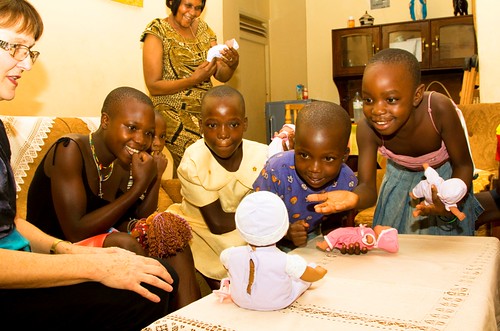
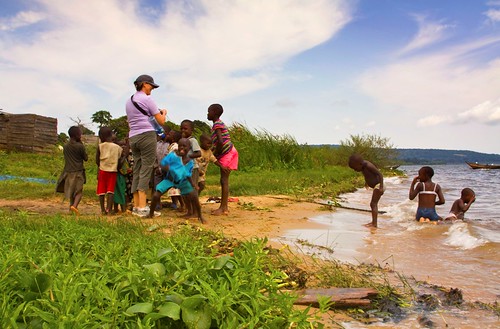
Greeted by the young curiously, another from distant lands

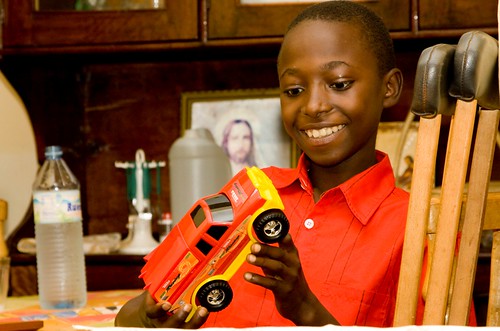
Sweet dolls and shiny trucks swiftly charmed the eager gaggle

One baby, oh it can’t be! even turned and babbled

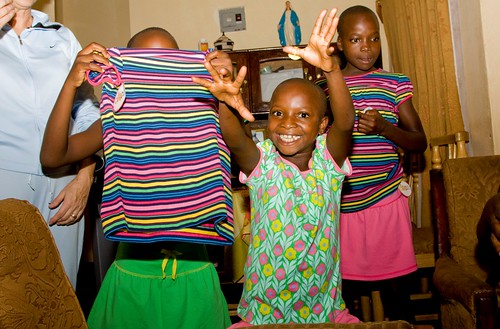
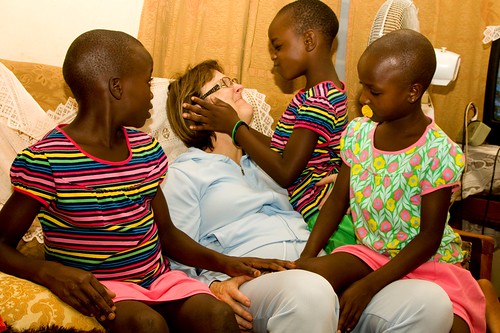
Skirts and shirts bright and tagged, again more dancing smiles

And it was uttered jah jah burungi! not long after a while

And things till now unseen, oh so many! brought with the fair elder

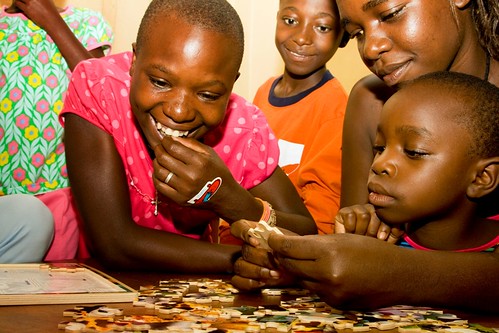
Coloring books and waxy crayons and puzzles to put together

And private hires with seats clean and music clear, again a novel joy

And a picnic on the lake still and wide, more welcomed than a toy

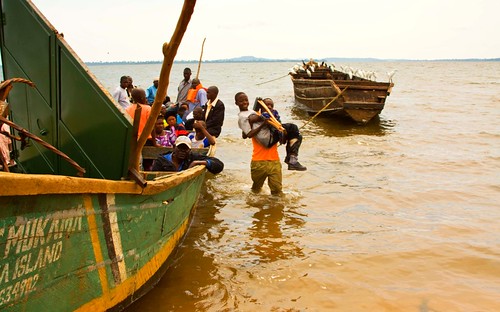
And can you believe? A boat delivered to the island wrapped in surf!

Seems strange to say, but none had watched water lap the turf

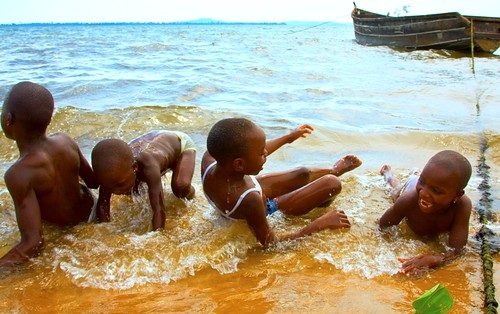
And of course there were stares and laughter and tenderly dipped toes

And then running and jumping and freedom as the water flows

But the long blissful splashing followed an improper investigation

Not till later was it realized, a likely bilharzia infestation

No wonder the island children watched we sighed, but matter it did not

For yes it was achieved that which was so long after sought

And for them and us and another birthday, yes me, I could not pretend

Watching it all, reunited, I recalled the course of a lifetime runs over and over again


See all pix here

Thursday, January 7, 2010

Space Oddity

You change here in pieces, in small, at times unperceivable ways. The change is quite fluid, quite peaceful and quite easy… if you are open to it. And if you are willing, one day you can awaken to the realization that you occupy a very different mental space than before did prior to setting out on your odyssey.

As you’ve been plotting and toiling in one space, you’ve also been floating along in another, going in a very different direction; and you may look back at yourself in the most peculiar way. And though your new space may seem far, beyond 100,000 miles, you will feel quite comfortable, in fact, very still, as if your spaceship knows which way to go.

Over the months in the land that was at once new and strange you will have seen roads and hospitals and schools and stores, and you will have listened to music and speeches and radio and conversation, and will have eaten bread and mangos and rice and bananas, in fact many bananas, and everything will resemble what you knew from before, but will look and sound and taste very different today.

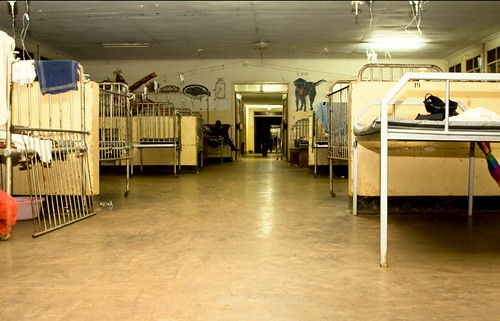
And you will see glimpses of people who once surrounded you in the old space, maybe you will be reminded on Aljazeera, maybe you’ll watch a woman complain about having to keep her job because otherwise she can’t afford medical insurance, which she needs because she is being treated for an aggressive form of breast cancer and into your mind floats the prayer service you attended last Easter at your Ugandan auntie’s house and how an old sick woman was brought up to the make-shift stage by the outrageous pastor who claimed during his hours-long sermon choked with blood-boiling mendacities (such as his ability to cure people with AIDS) that the holy ghost told him there was a woman with breast cancer in the midst (although your better logic tells you the auntie of the house simply told the man this), and the pastor goes on to say he doesn’t like surgeries and commands the frail woman to not pursue her one treatment option, which is a mastectomy in a land without proper chemotherapy and radiation, and, in fact, the pastor then throws his hands in the air and claims with unabashed arrogance he has cured the old woman too! and everyone in the flimsy lawn chairs begins clapping like a bunch of fools at a circus while you fidget wildly, nearly uncontrollably in your plastic chair hoping the holy ghost also has the mercy to drop the murdering pastor dead right then and there on the stage while everyone is appropriately cheering; and as you relive this memory, at the same time you recall all the hospitals you’ve frequented these many months and how patients are packed into wards (of course never with nurses who properly care for them, or machines that monitor their vitals, or specialist to treat the sickest), and you remember just last week the man lying in the cot at the foot of your boy’s bed and how the man suddenly began flailing violently while his whole family (who appeared from their traditional clothes to be from deep within the village) stood watching not doing much of anything because they presumably didn’t know any better, so you went searching for the nurse and she didn’t seem to understand the word seizure so you shook demonstrating for her and she calmly replies the man was cold and you are like noooo the man wasn’t COLD, so you find the short doctor with the funny round spectacles and he injects something into the man’s IV and as you resume just staring, staring into the huge room in need of paint, full of sick and dying people surrounded by their family members resting on the concrete floor because there are no chairs and no spaces of comfort in these hospitals, the man laying so near seizes again, only this time harder and so you find the doctor again, but soon thereafter you leave, so you aren’t quite sure what happened, but a couple of days later the man in the bed just a few feet from your Ugandan son’s isn’t there anymore, the space empty and you don’t know why or where he has gone and you really don’t want to ask; and maybe just now, at the same moment you are watching the news programming with the complaining woman and remembering the sermon with the deceitful pastor and reliving the hospitals with the scores of dying people, there is an out of work African man (as if that needs to be said) staying in your home with growths squeezing numerous organs in his body and there is really only one hospital in the whole country with the oncological abilities to assist him and he would be lucky to ever be admitted and luckier to ever afford treatment because most others here (in fact millions of others here) are never diagnosed and just die unknown deaths quietly in villages and maybe you think that the woman on the TV wearing the nice clothes and nice jewelry sitting in the nice home shouldn’t be grumbling about how she has to keep her job with good pay and free medical insurance so she can continue to receive the best treatment on the planet while there are millions (in fact billions like stars in the universe) who would never be so lucky as to complain about such a thing, including a person sleeping under the same roof not more than several feet from you.

And that man, like all those now crowding your new space, just accepts things as they are, everything about his and their lives, including his and their deaths. And you become more accepting too, not trying so hard to change everything, and that tolerance affords a certain peace as you continue to float along in your spaceship. Here in the new space life is very real, nothing is figurative; metaphors, like treatments, are luxuries. Here is the space of the literal.

Planet Earth is blue and there’s nothing I can do

And while it may seem bizarre and nightmarish to those who haven’t left their capsules, the new space is not without its merits, it’s not always despairing or discouraging or depressing, and you realize it is not because here you are never alone, never isolated, although this may appear contradictory to the inexperienced; in fact, you will awaken to see that you are not, nor ever were floating by yourself. Occupying the new space is a sweeping sense of community and family as vast and novel as the cosmos; one that abhors individualism, in some ways for the worse, but in many for the better, and loneliness and alienation are largely unfamiliar; and therefore everything in the new space has a different sense and worth; and when I speak to people filling the space here, their understandings at many times would be an oddity to you. And for that matter it would be an oddity to the person I was.

Planet Earth is blue and there’s nothing I can do

Saturday, January 2, 2010

A Thousand Beautiful Things

After visiting Richard in the hospital in Buikwe the afternoon of New Year’s Day, him still recovering from surgery the week prior, I arrived back in Lugazi to fetch some food from the open air market in the town’s centre. While making my way back home to start dinner I practically ran into my friend Sandra.

“Sandra! How are you? I haven’t seen you in so long. How was your Christmas?”

“It was good,” she said smiling.

“How was your New Year’s?”

“Well, right now I am going to visit some patients.” I knew that Sandra often paid hospital visits to people who worked on her community projects who fell ill.

“Who’s sick?”

“Well, I don’t know them. I am going to the children’s ward,” she replied holding out some sweeties.

“Oh, that is so nice of you! Actually, maybe Peanut and I will go. Let me run home first and drop off these things. Flash me when you are arriving at the hospital.”

Okay.

As Peanut and I walked through the thick muck saturating the ground and splashing onto our clothes, I asked her if she knew why we were going to the hospital. She didn’t know.

“Okay. What do people do on holidays like New Year’s?”

Peanut gave me a strange answer about learning and reading.

“Umm. Not really. Don’t people eat good food on holiday and go to church and go to the villages and see their family and friends?”

“Yes!”

“And what is that? It is fun, yes?”

“Yes.”

“Well imagine if you were in the hospital. The hospital isn’t very fun, right? You are sick and don’t feel well and maybe you are scared because you have to have surgery.”

“Yes.”

“So we want to go say ‘hi’ to these children on New Year’s when everyone else is having fun and they are scared and sick in the hospital.”

“Yes!” Peanuts agreed wholeheartedly swinging my hand in hers.

We arrived at the hospital in Lugazi, which is not more than a third of a mile from our house. Night had blanketed the sky deep indigo and the long narrow blocks of the hospital dorms lit up with lousy florescent lights. I entered the block painted Pediatric Ward on the side.


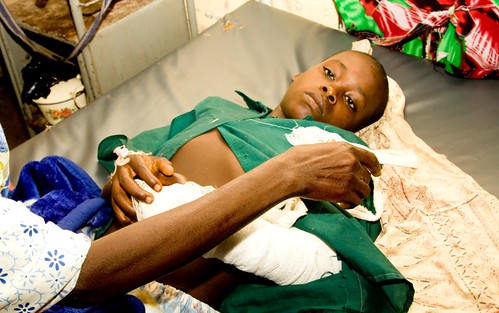
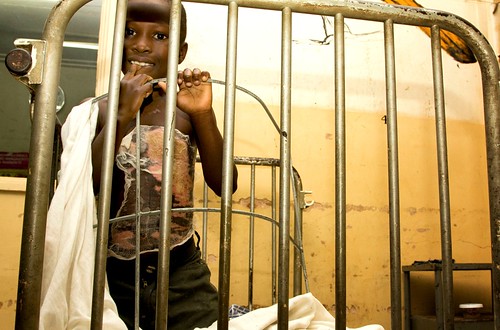
Sandra was leaning over the railing of one of the beds looking down at a boy lying placidly on his back, his arm wound in white bandages and gauze.


I followed Sandra’s example approaching the rows of bed, most fortunately empty, wishing the children and their mothers and caretakers a Happy New Year. I handed them packets of biscuits and spoke with them briefly. Many told me the cause of their hospital stays.

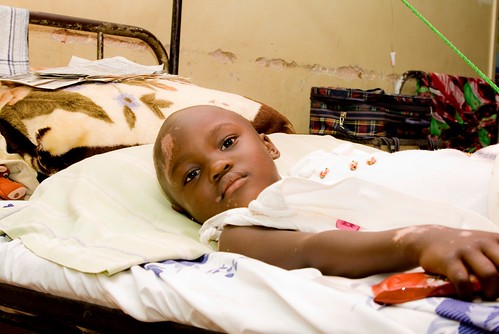
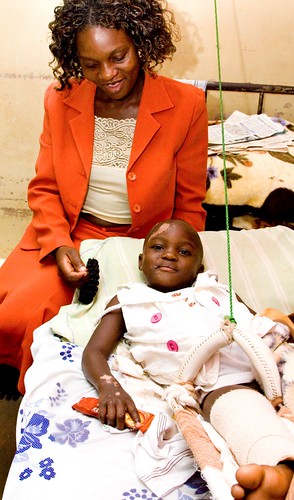
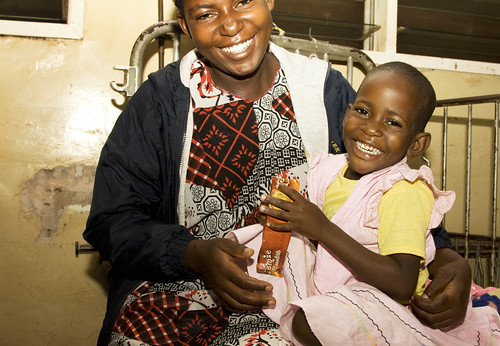
An unfortunate victim of an all too common occurrence by the notoriously careless drivers, little Masa had been stuck down by a boda on the 21st and would remain in the hospital considerably longer in traction. Her mummy showed me her x-ray: a completely severed bone.


“Oh! You poor thing! Was the bone sticking out when she was hit?”

“Yes.”

“Yeah, that’s a compound fracture. Oh! It must have been so painful.” I turned to the little girl. “But you’ll be okay.”

The four year old smiled and said brightly, nearly bubbling, with surprising conviction, “Yes! I will be okay!”

I laughed and patted her. “You are so kanyama!” Then the mother laughed at me, surprised at my knowledge of Luganda.

“Yes, she is very strong.”


I moved to the other beds, mostly filled with babies and toddlers with malaria hooked up to drips, their mothers patiently sitting at their sides. One poor mother had two patients in the hospital, a baby with malaria and a young boy who looked like he had also been hit by a boda. Covering his abdomen was a large open sore, which fortunately appeared to be healing well and the child seemed to be in good spirits, squirming on the bed and laughing while I took his picture.


Other children were also recovering and happy.


But other children were sick and sad.


Still others were scared of buzungus.


Later that evening Peanut sat on the couch of our home while the TV played unwatched in the background. She looked up at me as if she wanted something.

Chi Chi?

“I want to watch videos,” the girl told me.

“You don’t want to watch TV?” I asked surprised. She shook her head. I laughed. “Okay. Come.”

She followed me into my room and I loaded on my computer a collection of Annie Lennox videos, which much to my amusement, the girl loves. She sat in my room memorized with the monitor, singing and dancing as I put away clothes laundered earlier that day.

“You go to the next one. I don’t like this one,” she said as another video queued.

“Noooo Peanut. I am not skipping through this one. This is a very good song. It’s one of my favorites. It’s about gratitude. Do you know that one, gratitude?” Peanut shook her head. “It means thank you. It is being thankful for something.”

Peanut looked at the video skeptically, but with more interest; the soothing notes continued to float through the room.

I thank you for the air to breathe, the heart to beat, the eyes to see again

“You see. She is saying thank you for being able to breathe, to have a beating heart, to be able to see. She is thankful for simple things, for being alive.”

I looked over at Peanut as I stuffed socks into my drawer. She had been standing, but suddenly sat watching intently. She began singing.

The world was meant for you and me to figure out our destiny

To live to die to breathe to see to try to make your life complete….

A Thousand Beautiful Things

Thursday, December 31, 2009

It's a Wonderful Life II

With the year drawing to a close, unceremoniously as it were for me, and despite me not really prone to reflect on the passing year or conjure up resolutions for the new one that will inevitably be forgotten before spring, it would be a bit sophomoric if I didn’t look back on 2009 and acknowledge what an extraordinary year it has been for me personally; what a life-changing and life–affirming set of months it has been learning all the glories and horrors of Africa, and trying my best to be mommy to five needy children.

I would also be remised to not thank each of you have supported me during this year: all of you who have read the blog, all of you who have given generously, all of you who have offered kind words of encouragement. Just yesterday, after receiving another donation from a friend in the States, one of many from some of you whom I haven’t seen in years, some of you whom I don’t know well, some of you in fact who are total strangers, I felt like I was transported into the body of Jimmy Stewart in It's a Wonderful Life dumbfounded and touched by all of the people coming with assistance for me and my orphans especially during this holiday season.


My work here could absolutely not happen without your help in all its forms and for that I truly am forever grateful. A special debt of gratitude goes out to Rachel Stankowski, Mari Giusti, Woo Jin Shim, Brian Stai and my sister, Melanie for organizing fundraisers that occurred in recent months, and of course to my Ugandan family, the Balazas, and my real family in America, the Cranes, without whose bi-continental support none of this could be possible.


Thank you again for all of your kindness and Happy New Year!


Natalie

Tuesday, December 29, 2009

It's a Wonderful Life

My Christmases are usually spent at home nesting, my family and I lounging by the tree, unwrapping dozens of presents, cooking a massive meal, baking plates of cookies. My Christmas in Africa passed quite differently: I moved in taxis and bodas to visit family members, I didn’t open stockings and boxes, I fumbled making a meager dinner, I didn’t touch a single baking sheet.

On Christmas Eve Ester was at the hospital in Buikwe with Richard helping him recover from his surgery performed two days prior, and my girls were in the village with their father, extended family and tribal elders as customary during the holiday season. While visiting the hospital that day I asked Ester if it was alright for me to take her daughter Peanut, whom I was looking after while Ester was in the hospital, to Mukono to have dinner with some buzungus. Ester’s face lit up.

“Yeah, she will really like that,” she said laughing.

“That’s what I thought,” I said envisioning the girl enjoying eating foreign food and being surrounded by the strange, but enchanting buzungus.

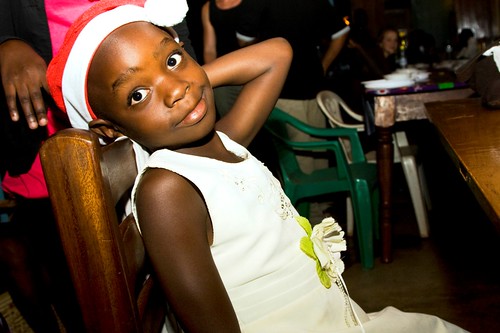
As suspected, Peanut did have fun Christmas Eve dinning with the Europeans volunteers; she got a Santa hat from one of the women, practiced her photography skills with another woman’s camera and played soccer with some of the men; she did not like the holiday meal though.

“Peanut. Are you going to eat any of this?” I asked her after everyone else finished eating, eyeing the girl’s plate still piled with lasagna, quiche and pasta. She shook her head. I took the leftovers unable, especially after living in Africa, to let anything go to waste; it was also a welcomed and rare opportunity to taste Western food. “Let me get you more chapatti and kebobs,” I said fetching for her the only two African dishes on the spread.

My namesake and I ate our meal then spent the night at the well maintained property filled with wide bandas and tall trees and floating birds and cackling monkeys resting on a hill overlooking Lake Vic and Kampala – a former children’s home that now serves as housing center for a European charity. We awoke the next drizzling morning and walked through the fog along the hillside toward town; the roads were quieter, the taxi conductors a bit friendlier, but it was generally an ordinary morning; it certainly didn’t feel like Christmas.

At home we found some of my little friends: a group of young girls who visit on occasion, sitting on the floor of our main room quietly watching me amused and intrigued, sometimes I have them do my wash or help me clean the house; they are good friends to have indeed.

“Hi ladies! How are you?” I asked the foursome.

“We are fine.”

“Merry Christmas!” I said entering my bedroom. “I am sorry, but I have to leave now for the hospital. I just came to drop off my things and change.”

Peanut and I then went for town to purchase some gifts and supplies and boarded a taxi for the Buikwe. After jumping along the dirt road for twenty minutes we arrived at the hospital to find Richard drugged up; eyes swimming; face placid. I tried to greet him but he stared at me blankly. I smiled at his confusion, stroking his head.

Soon thereafter the nurse administered more medication through his IV. The boy had to be sedated during his daily dressing since the surgical wound was so deep, penetrating well into the bone, he could not to be conscious while it was flushed and repacked with iodine-soaked gauze.

I accompanied the boy to the dressing room as he fell under, head and eyes rolling back, fear and pain vanishing from his face. I then watched the doctors pour hydrogen peroxide into the large, unsutured hole pink fuzz bubbling and pouring out of his leg like a child’s science experiment; the doctors informed me they had removed a six by two inch section of dead bone during the operation. We had to go very deep.

When Richard was again coherent, gazing at me in recognition, I pulled his gift from my bag.

“Look Richard, I got a car for you,” I said handing him a yellow toy car. He smiled and played with it dully, still weighted by narcotics.

“Mommy! I want a gift!” Peanut exclaimed to me looking at Richard’s present and the remaining gifts in my bag.

“No Peanut. Those dolls are for Rachel and Sylvia. Your Christmas present was going to Mukono and staying the night in a nice place and eating good food and taking pictures with buzungus.” Apparently that wasn’t enough: Peanut started crying. Ester laughed at her daughter’s stubbornness, and eventually another doll was bought.

Peanut crying on Mama Ester because she didn't have a doll

After spending a couple of hours with the Richard and Ester, Peanut and I had to make our way to the village to check on the girls. We boarded a boda and traversed the back roads of Buikwe to the children’s ancestral home. The ride took nearly 30 minutes, but was peaceful and beautiful; we floated over the red mud under the grey, but lightening skies, villagers waiving at us while they prepared their Christmas dinners on charcoal stoves outside, village children frolicking barefoot in their tattered soiled clothes, goats and dogs running through the thick green vegetation blanketing the rolling hillsides. We finally arrived at the children’s plot. The girls ran to me screaming, “Mommy! Mommy!”

I handed them their $0.25 plastic dolls. They threw their hands in the air with elation. Then I noticed Taka was hobbling on one leg.

“What happened here?” I asked grabbing her foot.

Apparently she had caught her foot in a bicycle. The open wound covered nearly half her foot, was partially scabbed over, oozing and Christmas green.

This father is a total and complete idiot. He can’t even look after the children for a couple of days.

We stayed a short time then I told the father I was taking Rachel back because she needed to go to the hospital.

“You take B2 to help you with Rachel,” he suggested. I wasn’t sure why I needed Beatrice to help me look after Rachel, but I wasn’t thrilled about the girls staying with their irresponsible and addicted father, so I didn’t protest. As the four of us climbed on the boda back to town, Sylvia’s face fell, she cried wanting to come with us.

“No, Nabu. You stay here a couple of more days with your family and Agnes,” I reassured her. “Here play with your dolly. Mommy will see you soon.”

The three girls and I returned to Lugazi as dusk fell and the town’s few lights blinked on. I made a face disembarking from the motorbike: I now had two more mouths to feed and the Balazas were in Kampala visiting other family members and I didn’t really know how to cook in an African kitchen; I would just have to give preparing an African Christmas dinner my best shot.

I bought some meat, rice and vegetables and began chopping in my hands with a broken knife, fetching water from the bathroom faucets, picking stones from the low-quality rice, pulling bananas from cupboards for boiling. After a few hours we sat down to eat and I pleasantly surprised the girls and myself with an unburned meal.

B2 eating Christmas dinner

“It is good?” I asked them as they shoved food in their mouths at our undecorated table.

“Yes!” The answered merrily, Rachel sticking her thumb in the air.

“So did you have a good Christmas?”

“Yes!” They exclaimed again. I looked at my children’s happy faces; it was wonderful having them back after their being gone just a couple of days.

“Good. I had a good Christmas too.”

Peanut and Rachel playing with their dolls

Wednesday, December 23, 2009

Christmas Come Early

It has been blazing hot here these last three days, the kind of heat I had always associated with Africa, the kind that cracks landscapes, coughs dust, destroys crops, emaciates wildlife, starves villages. Contrary to the song that I haven’t heard since last December, but many of you no doubt have an uncountable number of times recently, it is not beginning to feel anything like Christmas; I am in an oasis of wreathless doors, lightless windows, cookieless kitchens, treeless family rooms, stockingless mantles; no gift lists, no holiday sales, no mall trips, no baking bonanzas, no present exchanges. In fact, I am not planning on giving or receiving any gifts this season besides maybe biscuits and samosas to my Ugandan friends and family, and I was actually very much looking forward to experiencing the holiday simply, sans the extravagance and materialism.

I have been a bit curious how the holiday season would unfold here asking Ugandans about their Christmas plans over the last several days. They casually smile, excited about it as we are in the West, but just as they approach life generally, are without excessive stress and high expectations; it’s an African Christmas.

“What are you doing for Christmas?” I’ll ask.

I don’t know. Mass in the morning then Christmas lunch. I will visit friends.

“What do you have for lunch?”

Meat, Irish [potatoes], rice, chicken.

“You have meat and chicken?”

Yes.

“That is very nice. Do you exchange presents?”

No.

And so are African Christmases: visiting an ancestral village, attending Christmas mass, eating a special meal of freshly slaughtered chicken and produce from their gardens, and maybe wealthier Ugandans exchange some simple gifts; their houses aren’t adorned with mistletoe and wreaths and bows and knickknacks, their airwaves aren’t choked with commercials and songs beckoning them to shopping centers, they don’t worry about spending too much or too little on friends and family, they don’t stuff themselves with chocolates and cookies and cakes and candies. As such, I knew my Ugandan Christmas would be unlike any I’ve experienced before, but, as it has delightfully turned out, will not be without at least one cherished and much appreciated early Christmas gift: Richard has finally had his surgery.

After months of care and commuting between the Lugazi and the hospital in Buikwe on dusty, curving, and probably dangerous dirt roads, consulting with countless surgeons, and him already having one unsuccessful surgery, the boy has finally had the operation that will hopefully end the infection that has for the last two years wreaked havoc on his leg, mobility and self-esteem.

I had gone to the hospital in Buikwe this past Thursday to consult the surgeon and we had tentatively scheduled Richard’s operation for Monday.

“You have the x-ray done today and I will look at it on Monday and let you know if we can do the surgery,” the Slovak doctor told to me as he rushed out the door for a long weekend at Mount Elgon.

“Oh. You mean you might not do it after all?”

“It depends on what the bone looks like. It needs to be strong enough.”

“Oh. Okay. I’ll call you Monday morning.” I was a bit disappointed, but had learned to question all assumptions and expectations here; African life was like driving down a road blanketed in fog unable to see two feet in front of you; you really never know what you are doing, never really know where you are headed, never really know what is going to happen.

I called the surgeon Monday.

“Yes. The bone looks strong enough in the x-ray. We will do the surgery. You bring him tonight to be admitted and we’ll do it tomorrow.”

YES!!!

So Monday afternoon I boarded a taxi to Buikwe hospital with Richard where he had a second x-ray taken and was admitted in preparation for the following day’s surgery then I left the boy behind and Ester came to be with him; remember, you have to have your own nurse with you at African hospitals to clean you, feed you, dress you, care for you; there are African nurses, but despite my being here for nine months and having spent much of that time in hospitals due to personal illness and that of others’, Ugandan nurses’ exact job duties remain elusive to me; I see a lot of mulling around, lounging on chairs, slowly moving through halls.

The surgery was to happen on Tuesday. I received a call from Ester at the hospital in that early afternoon as I ran around Lugazi managing the snack shop and trying to sell off the first round of chicks from the Maama Muzungu Poultry Farm in time for Christmas. She sounded typically calm when she greeted me, then:

“They are doing the surgery tomorrow.”

“Okay,” I replied trying not to feel rejected. Patience, patience, patience; patience is virtue.

I waited patiently yesterday for today to arrive. I waited patiently this morning for Ester’s text confirming the operation had begun. I waited patiently for Ester’s call confirming the operation had been completed. I finally called her.

“He’s out now, but like last time needs to be held,” she said to me. My mind flashed back to Richard's summer operation when the boy was only given Ibuprofren for his excruciating pain.

“Okay. I am still waiting for Vegas to help us sell the chicks, but I’ll be there soon,” I said feeling sorry for the boy, but lifted from an incredible sense of relief. I hung up the phone and soon thereafter Margaret, my Ugandan Mummy came to the snack shop.

“Richard has had his surgery!” I exclaimed to her.

“Oh that is very good!” She responded with a huge smile and lightening shoulders; we've all felt the burden of the boy's discomfort.

“Yes, and it was just in time for Christmas!”

“Yes, just in time for Christmas. It is a good Christmas indeed.”

Indeed.

Tuesday, December 15, 2009

Sense & Sensibility

Dearest Sensibility,

I beg you not take offense to this open correspondence and its communal nature; however, I have long since been aware that your tendencies, quixotic and impetuous as they are generally regarded, have done you, and therefore I, some ill will during the course of our existence this score and a half.

Whilst we are two distinct spirits forging a single individual, one can only characterize our engagement at times as disagreeable and disharmonious, and one can only describe our self as more often than not divided and perplexed. Owning to no greater interest than that which is ours, I am compelled to expound upon your worth, and it is, to be sincere, all that is charming, glorious, destructive and absurd.

Africans are not unlike us in their duality of disposition and we have had the most unpleasant of interactions with the sort whose gentle countenance disguises vastly divergent temperament and aims. Those nearly most trusted have regretfully proven otherwise and the ensuing disappointment has been a most unwelcomed surprised despite being forewarned of what one has come to expect of Ugandan charity and goodwill.

With this and the welfare of the motherless souls in keeping, I implore you to step with greater trepidation and exercise vigilance of the highest degree, which is to say, that it is imperative that you restrict your influence so as not to exist. Permit me, Sense, to offer full guidance of our shared thoughts, words and deeds, and allow your impassioned whims and gay imprudence to lie dormant for the duration of our stay in a property and populace familiar, nonetheless utterly foreign in speech, dress, tastes, and behavior, not to say anything of work ethic and integrity.

I pray you not take my expression, admittedly direct and abrasive, as a type of defamation or degradation of character; rather, to see that my situation, as it is forever bound to yours, as such, our situation, requires my full inspiration and instruction. Our endurance and that of those entrusted in our care, depends upon our decisions, of which you have proven time and again unfit for seriously making.

So, please, dearest Sensibility, heed this call to lay down your unsuitable arms, and with my complete directive I can assure us an ease of mind and accomplishment of action hitherto unseen, as I am as confident in my abilities as much as I am not in yours.

Yours truly, your most common,

Sense

Thursday, December 10, 2009

Quiet Faith

“We need to help Sharif look after her baby," I said to Ester last week of the Maama Muzungu Poultry Farm caretaker. "She is trying, but I don’t think she quite knows what she is doing.”

Ester nodded. Ester had been a young mother herself; in fact, younger than Sharif when she had Peanut, just a teenager. Maybe Ester made similar youthful motherly mistakes, but I suspected not to the same degree; I knew Ester to be very competent and bright. Ester and I both realized after becoming acquainted with 20 year-old Sharif we would have to guide her through some maternal duties.

Sharif and her baby in front of MMPF

Ester and I had just been to the poultry farm checking on the chicks’ health, taking inventory of feed and monitoring Sharif’s performance; the woman was hard working and serious about her job, she was doing well looking after the chicks and trying to properly care for her baby; but, it seemed, she was facing some challenges with child-rearing.

We spoke with Sharif outside the farm as she held her crying son, the baby sick as usual. My mind wandered during our conversation attempting to recall an instance when upon my asking about the welfare of her child Sharif had replied he was well.

Sharif handed the boy to Ester and entered the wooden structure to tend to the chicks. The boy continued to wail in discomfort. Ester and I inspected him; he still bleed from being circumcised a couple of weeks back. Sharif emerged from the farm.

“You can’t clothe him in jumpers,” Ester instructed her in Luganda tugging on the boy’s trousers. “You need to put him in a shirt and wrap him in cloth.” Sharif nodded. Ester touched the boy’s vaguely discolored face. “He has a rash here too.”

“Yeah, it’s gone away though,” I said to Ester. “She got treatment for that one and the circumcision last week, but his little wee-wee is still not good.” I pouted.

"It will be okay if she doesn’t clothe him like this,” Ester told me as Sharif took off the baby’s pants swaddling him in cloth.

Sharif seemed to understand how to better care for her baby after being instructed; I didn’t see him in pants until the wound had healed; however, two days ago when I again inquired about the baby’s health as Sharif and I mixed the chicks’ feed, she replied “He’s not well. He’s sick. Malaria.”

I squinted. “Are you getting treatment?”

“No.”

“Why not?”

“No money.”

“Okay. When we finish here, we go to town for treatment for the baby."

“Thank you auntie,” Sharif replied genuflecting and returned to shoveling hundreds of kilos of maize bran mixed with nutrients.

Sharif and I passed through the dirt and paved roads to town, her with baby in arms. We stopped at the fat, kind woman’s pharmacy, the neyabo who always waives at me eagerly when I pass, the madam who never forgets to ask about my children.

"Mama. How are you?"

"Fine."

“Good. This one has a sick baby,” I said pointing to Sharif. “I am going to first check the blood, but we think it’s malaria. I am leaving now for the hospital with my boy, but please make sure she gets whatever medication she needs. I will pay you tonight.”

"Okay,” the woman replied and led us through her back door to the lab on the other side of the courtyard.

I approached the short woman at the lab.

“Neyabo. How are you?”

“Fine.”

“Good. Please give this one a malaria test for the baby. Here is the money.”

I handed the woman one thousand shillings then turned to Sharif.

“Sharif. When you are done here you go back to the pharmacy and get your treatment. I have to go to the hospital in Buikwe now. I can’t wait any longer, but they will help you.”

“Thank you auntie.”

“No problem. Bye.”

I ran off with Richard whose infected leg was emitting a foul odor and was cause for concern. I rushed to the hospital some twenty minutes from Lugazi only to wait an hour for the muzunugu surgeons to emerge from the theatre. The surgeons removed the gauze and looked at Richard’s open wound.

“The leg smelled before, but it is worse now,” the surgeon explained unconcerned. “We will do the surgery on like the 17th.”

“So this isn’t a problem?”

The surgeon shook his head. “Just be sure to keep him on the Cipro and have the dressing changed every other day.”

“Okay, but you just told me you and the other muzungus are going to Mount Elgon in 10 days. You’ll be gone on the 17th.”

"Oh, yes. That’s true. We’ll do it when we get back.” The surgeons inspected the calendar. “We’ll do it on the 21st.”

Fantastic! I was relieved that the smell wasn’t as dire as imagined, and that I was a step closer to having Richard’s surgery completed, although I remained cautiously optimistic.

Still celebrating one medical accomplishment, the following morning I inquired about Sharif and the baby with the fat, kind pharmacist.

“No. She didn’t come back this today for the injection.”

“What? You told her to come back though, right?”

The woman nodded. I went for Sharif.

“Hello Sharif. Where have you been?” I asked the girl as she approached the poultry farm after my waiting for some thirty minutes. She replied in Luganda.

The woman on whose property the farm resides explained to me, “her mother called her urgently this morning.”

“Okay, but it’s important the baby gets treatment. When people don’t complete their doses, that’s how they die. You finish here then go right away for the injection.”

Sharif’s eyes were wide. She nodded enthusiastically. She quickly filled the chicks’ drinkers and off she ran.

“That one has too much going on,” said the property owner as we watched Sharif leave. “She has the baby, the mother, the chicks.”

“Yeah,” I agreed thinking how she wasn’t unlike other Africans, mainly other African women, working hard at a job that doesn’t quite make ends meet, attending to her children and parents without spousal support; I agreed thinking how occupied one was looking after five orphans, including a child with a debilitating medical condition, and providing for an African mother and her daughter while running two new businesses and managing six workers in a land rife with cultural differences, exasperating efficiency and inconsistent logic. “But…she’ll be okay,” I shrugged assuredly.

Sharif with her baby and some village kids in front of MMPF
Saturday, December 5, 2009

Navigating Africa Surgically

I have taken to telling people that I will only know Richard has had his second operation when he is wheeled out of the theatre and the surgeon confirms the operation was successfully completed and actually involved penetrating Richard’s tibia. Then and only then will I confidently say “Yes, Richard had his surgery.”

Richard’s first operation was performed this past summer. The days following I accompanied him to the hospital in Buikwe, a rural area near the shores of Lake Victoria, for post-op care. It was then that I learned firsthand of the procedure’s precise nature.

I stood outside the hospital with Richard under the glaring sun, on the red dirt road waiting for a crumbling taxi van to pull up and send us into a cloud of whirling dust. Richard’s attending physician walked by and greeted us. The gentle conversation and my light mood swiftly collapsed when the doctor told me blank-faced that the surgeons “only cut into the boy’s skin.”

I jolted. “What?”

He repeated himself.

“That can’t be. They went into the bone. All the doctors told me that is the only way to effectively treat chronic osteomyelitis.”

“Yes, but it was superficial. They didn’t have the right instrument to cut bone.”

I shut my eyes. My stomach dropped. My head shook. Nobody bothered to inform me that the required surgery as originally planned was not performed due to lack of proper mechanisms until it was casually mentioned to me several days later. Another, only in Africa moment.

The doctor saw my disappointment; I am unsure if he recognized my disgust.

“We will do it in October. Another surgeon will be coming from Europe then.”

“But will you have the right instrument?”

The doctor’s face lifted in surprise and contemplation. Apparently he hadn’t thought of that.

“I’ll ask my administrator.”

“Okay. I need to know soon because then I will have to take my boy to another hospital and start the procedure of queuing for another surgery all over again if you can’t get it.”

The doctor nodded and crossed the dusty road.

Calls and visits to Buikwe hospital over the next few weeks were more of the same non-answers. Yes, a surgeon is coming in October. Or. Maybe November. I have requested that we order the instrument.

I was contemplating not waiting till the fall for the elusive Czech surgeon and surgical instruments for fear of another mishap. But this hospital, despite its gaffe, was seemingly more trustworthy than the other option: the government hospital, Mulago.

I was told that one needed to “know somebody” to be effectively treated at Mulago. And the surgeons there didn’t have what the surgeons at Buikwe hospital had, Western medical training and practice. I had a choice: gamble and wait on medical practitioners and instruments to be flown into Buikwe from abroad and have a surgery performed at a low cost or start over and try my luck with the notorious government hospital where the total costs could be considerably more and the quality of care significantly less. I decided to wait it out.

“The surgeon will be here the first week of October,” Richard’s doctor had assured me in September.

“Okay, so I will plan on coming a couple of days after he gets here?”

“Yes.”

I came the agreed-upon day. The surgeon had just arrived, but wasn’t actually at the hospital yet. Come back tomorrow.

I returned the following day and entered the dressing room; shimmering blue eyes and glowing fair hair and skin greeted me. I had long since taken to staring at muzungus like Africans. They look so strange and what are they doing here in Uganda?

The Slovak doctors introduced themselves. The surgeon was of the general variety, but had been to Africa and performed orthopedic surgeries on chronic osteomyelitis patients previously. They unwrapped the bandage and looked at the boy’s oozing leg.

“Yes. I can do the surgery. We will do it Monday.”

“Okay, but the last surgeon didn’t have the correct instrument. Do you know if they’ve gotten it?”

“I think so. I am like 90% sure we will do it Monday.”

Richard and I were at the hospital Monday, but the instrument was not.

“I will see if I can order it,” the doctor told me through his Eastern European accent.

I was deflated, but not surprised. I was coming to understand African life as a menagerie of the exotic, sluggish, insincere and incalculable; it could only be reliably defined as careless and unexpected.

The doctor was going to text me with an update. A week later a message from Dr. Mark blinked on my phone’s screen:

“Hi Nataly. I am sorry, but we still don’t have the instrument and any information when we will have it. When I know more, I will let you know. Maybe on Friday. But it will take some time.”

That week I began mobilizing for Plan B. But then I received a call. It was Richard’s attending African doctor.

“Hi Natalie. Can we meet in Lugazi today? “

“Is this about Richard?”

“Yes. I will tell you.”

I met Richard’s doctor at a hotel in town; the instrument had been ordered and would arrive in a few weeks. They would be able to do the surgery.

I jumped up and down in the hotel’s bar. A few days I received another message from the Dr. Mark:

“Hi Nataly. I’m sorry I haven’t answered, but I still don’t have the instrument. Hopefully your boy will get proper treatment in Kampala.”

What is going on?!?

More calls and another visit to Buikwe confirmed that the instrument was on order to arrive mid-December. The surgeon currently at Buikwe would only be there until year end. Come January, I was told, another European doctor would be coming. But what if he couldn’t do the surgery? What if the instrument arrived late?

I was getting anxious, but the unpredictable nature of Africa could make one perpetually nervous, it could aggravate ulcers developed from a bacterial infection contracted during one’s stay. I was forced to learn to live with the chaos.

Why? Why? Why? Is often the chant from Americans on the other end of my phone, wondering why instruments take so long to arrive, wondering why swabs of infected legs can’t reliably be taken during a surgery, wondering why medications are prescribed incorrectly or expired.

Whatever. I say. This is Africa.

So, as of this moment, as of my last conversation with the doctors at Buikwe earlier this week, yes, the needed instrument is to arrive in less than two weeks time, and yes, Richard’s operation is to take place sometime around the December 18, but as I have taken to telling all who ask, I will only believe the surgery has been successfully completed when Richard is in the recovery room and the surgeon is standing over his leg, showing and telling me the procedure has been performed as prescribed. Then and only then will I know my boy has been properly treated after five months of care and nearly two years of suffering with puss and drainage constantly emitting from an open wound on his right shin. Only then will I say, “Yes, Richard has had his surgery.”

Wednesday, December 2, 2009

Lugazi Images

Market at Morning
The vast majority of Ugandans either grow their own food or purchase it at open air markets such as this one in Lugazi.


Hanging on the Stoop
With no TVs, no toys, no electricity, no movie theaters, etc., most Ugandan kids hang out on their stoops in the evenings. The first two pictures are of a nice home; made of concrete and well-painted.


This girl resides in a more typical Ugandan town living arrangement: one or maybe two small rooms for a family, no yard, no plumbing, no power, etc.


Sitting in the yard
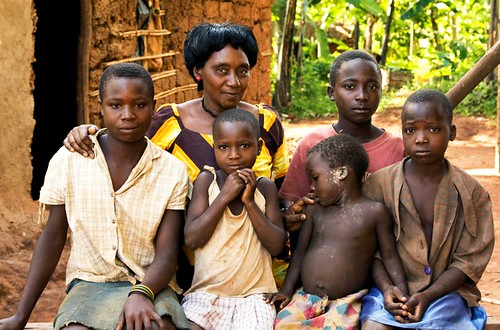
These children are fortunate to live in a comfortable house with an actual yard.